
Showing posts with label Hotel design. Show all posts
Showing posts with label Hotel design. Show all posts
Sunday, July 22, 2018


Monday, July 9, 2018
What are some less-than-desirable innovations you’ve noticed in modern hotels?
Those weenie little ‘pod-type’ front desks.

You’d think if you’re making an $8–10mil investment in a new hotel, you can tell the architect, builder or brand rep, pound sand, we’re going to stick to what works. But if it’s a new construction brand with that part of the design as a brand standard, you’re stuck with it.

I can understand why they wanted to go with something different. Historically, not a whole lot of work or planning has gone into front desk design in hotels. The front desk was basically a four-foot high countertop, with work surface, recordkeeping and storage faciities on the side facing the clerk.
If you’re checking into a hotel, your first stop is at a counter about the height of a judge’s bench in a courtroom, or the ‘service’ counter at the DMV. It’s disempowering. You’re approaching a counter from which emanates a lot of power and authority and one-sided discretion, but from which you don’t really expect caring service. It lacks warmth: the clerk is dealing with you behind a large physical barrier.
But the solution they came up was not altogether good.
You’d think if you’re making an $8–10mil investment in a new hotel, you can tell the architect, builder or brand rep, pound sand, we’re going to stick to what works. But if it’s a new construction brand with that part of the design as a brand standard, you’re stuck with it.
I can understand why they wanted to go with something different. Historically, not a whole lot of work or planning has gone into front desk design in hotels. The front desk was basically a four-foot high countertop, with work surface, recordkeeping and storage faciities on the side facing the clerk.
If you’re checking into a hotel, your first stop is at a counter about the height of a judge’s bench in a courtroom, or the ‘service’ counter at the DMV. It’s disempowering. You’re approaching a counter from which emanates a lot of power and authority and one-sided discretion, but from which you don’t really expect caring service. It lacks warmth: the clerk is dealing with you behind a large physical barrier.
But the solution they came up was not altogether good.
The triumph of everyday design
The triumph of everyday design
Luxury goods used to be better. Better than the alternatives.
The best-made clothing, the best saddle, the most reliable luggage. The top of the market was the place people who cared needed to go to buy something that had the highest performance.
Today, though, a Toyota is a better car than a Bentley. More efficient, more reliable. The Vertus phone was a joke, and no one needs a $200 mouse when a $9 one is faster and easier to use.
I spent some time at a high-end hotel on a recent gig. The light switches were complicated and didn't work quite right. The door handle was awkward. The fancy faucets sprayed water on whoever was standing in front of the sink. All expensive, none of it very well-designed.
As materials have gotten cheaper and easier to find, it's design that matters. And the market is demanding better design--which is easy to copy and easy to improve.
Expensive is not the relevant metric, utility is.
The best-made clothing, the best saddle, the most reliable luggage. The top of the market was the place people who cared needed to go to buy something that had the highest performance.
Today, though, a Toyota is a better car than a Bentley. More efficient, more reliable. The Vertus phone was a joke, and no one needs a $200 mouse when a $9 one is faster and easier to use.
I spent some time at a high-end hotel on a recent gig. The light switches were complicated and didn't work quite right. The door handle was awkward. The fancy faucets sprayed water on whoever was standing in front of the sink. All expensive, none of it very well-designed.
As materials have gotten cheaper and easier to find, it's design that matters. And the market is demanding better design--which is easy to copy and easy to improve.
Expensive is not the relevant metric, utility is.


Saturday, April 29, 2017
What is the difference between a hotel and a motel?
Years ago -- decades, in fact -- some state tourism office down in Florida offered a prize, somewhere in the mid five figures, to anyone who could come up with an answer to that question that would be authoritative enough to generate agreement by all as to a proper definition, and thus written into law whenever a legal distinction had to be made or acknowledged.
The prize remains unclaimed to this day*.

The closest anyone has ever come to a definition that has met with some agreement, is based upon the means of access to the rooms: Hotels - with some exceptions - have interior corridors, and you leave your car in a parking lot, enter through a main lobby, maybe take an elevator, and walk down an interior hallway to your room. Motels (the term 'motel' originated as a portmanteau word for 'motor hotel') have exterior corridors: you can park directly in front of your room (quite often, if you're on the ground floor, you can park directly in front of your door).
The prize remains unclaimed to this day*.
The closest anyone has ever come to a definition that has met with some agreement, is based upon the means of access to the rooms: Hotels - with some exceptions - have interior corridors, and you leave your car in a parking lot, enter through a main lobby, maybe take an elevator, and walk down an interior hallway to your room. Motels (the term 'motel' originated as a portmanteau word for 'motor hotel') have exterior corridors: you can park directly in front of your room (quite often, if you're on the ground floor, you can park directly in front of your door).
Usually.
Monday, April 17, 2017
Stop! Enough already with the 'adobe colors', and the earthtones, and the stucco and EFIS in hotel renovations! . . .

The patron saint of bad hotel exterior renovation, rest her soul. (I never hated Tammy Faye or really held her past association with Jim Bakker and The PTL Club scandal back in the 1980's against her, I just think her 'extremism is no vice in the war against aging' approach to the application of cheap cosmetics was a bit extreme, and has since been a bad influence on hotel renovation architecture . . .)
My current exterior design scheme of choice is to paint it white. White symbolizes purity.
And more to the point, nobody can argue with white.
(Well, obviously, someone could and did, given a recent design trend in hotel exteriors. I could see it as a fad, but it's gone on for ten years now and gotten to be too much. I'm sharing this piece on Twitter, where I'm followed by a few more people in the design field, so that in a year or two, hopefully, I can be credited with putting an end to it . . .)
Perhaps it's unimaginative, but someone out there must be getting pretty sick of that disgusting earth-tone yellow (especially combined with a blah brown) that it's become fashionable to paint stucco/EFIS hotels these days . . .

Wednesday, February 1, 2017
What would you do with an historic hotel built in the 1920s that was condemned and is now being given a new life as a boutique hotel?
Bring a large budget and a crowbar. And leave both of them locked up securely in the trunk of the car until you've checked out the neighborhood very thoroughly.
(Of course, if in checking out the neighborhood, you think you might need to get to that crowbar in a hurry, I'd pass on that hotel. We'll get to that part.)
I love old hotels and old theatres (So much history yet to make... | You don't see this anymore... | Old theatres (Rockin' the Paradise . . .) and I've barely started on those Pinterest boards . . . ), particularly those having some, at least local, historic significance. (The brand new Microtel on the next exit will be old in about 70 years, but not necessarily historic - 'cheap old' doesn't get it. The life expectancy of any building - like that of a person, and not entirely coincidentally - is seventy-something years. Yes, there are a lot of 80- or 100- or 200-year-old buildings out there, but in order to make that average work the way it does, there have to be an equal number that didn't make it past 40, or 50, or 60 . . .).

But while a project like this can be rewarding in terms of more than just financial return, you want to be careful with your emotions on something this delicate and potentially tricky . . .
Here are some things you should know before you even begin.
(Of course, if in checking out the neighborhood, you think you might need to get to that crowbar in a hurry, I'd pass on that hotel. We'll get to that part.)
I love old hotels and old theatres (So much history yet to make... | You don't see this anymore... | Old theatres (Rockin' the Paradise . . .) and I've barely started on those Pinterest boards . . . ), particularly those having some, at least local, historic significance. (The brand new Microtel on the next exit will be old in about 70 years, but not necessarily historic - 'cheap old' doesn't get it. The life expectancy of any building - like that of a person, and not entirely coincidentally - is seventy-something years. Yes, there are a lot of 80- or 100- or 200-year-old buildings out there, but in order to make that average work the way it does, there have to be an equal number that didn't make it past 40, or 50, or 60 . . .).
But while a project like this can be rewarding in terms of more than just financial return, you want to be careful with your emotions on something this delicate and potentially tricky . . .
Here are some things you should know before you even begin.
Why are hotels expensive even in developing countries?
Because most hotels - at least, those built by American or European countries - are built to American or European standards (or, to be fair, the standards that prevail in the world's most advanced nations).
You're not going to go to a developing country and skimp or cut corners or take shortcuts on building codes, building materials, furnishings, or fire codes or fire safety in building a hotel there. If something went wrong, it could go very badly for you, at the very least in terms of public relations. Or, if you furnished it on the cheap or used cheap materials, your property would within a few years stick out as less than your other properties and give your entire group a bad name.
You'll want to offer the same furnishings and amenities, because that's what your customer base (and without a pretty good idea who the customer base is going to be, I won't even buy or build in the next town, never mind a developing country) counts upon you for and expects to see when they arrive, so you don't want it unraveling.
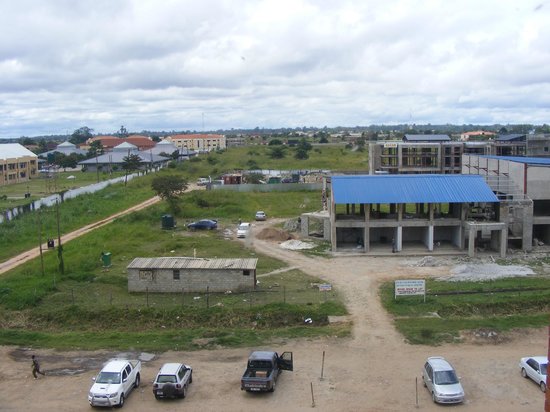
Also, you're dealing with increased costs: many of the things with which you'll be furnishing your hotel will have to be imported. Luanda, Angola, for one extreme example, has been on several lists of the world's most expensive cities for a few years now. Its economy never quite recovered from a civil war that occurred a few decades ago, so literally everything of value in that country has to be imported: plan on adding shipping and import duties. And now, they've found oil reserves there, creating a supply-and-demand problem on top of that. Meanwhile, the biggest need in that country for a few years to come? Housing. Plan on exorbitant land and construction costs.
I attempted to answer your question as I understood it (Why don't hotels get any cheaper as the rent and cost of living declines in less developed parts of the world?) I apologize if I did not understand the question correctly and did not give an appropriate answer accordingly. (Why is a hotel expensive by contrast to rent and cost of living, even in developing countries? It's like that everywhere.)
Originally appeared on Quora
You're not going to go to a developing country and skimp or cut corners or take shortcuts on building codes, building materials, furnishings, or fire codes or fire safety in building a hotel there. If something went wrong, it could go very badly for you, at the very least in terms of public relations. Or, if you furnished it on the cheap or used cheap materials, your property would within a few years stick out as less than your other properties and give your entire group a bad name.
You'll want to offer the same furnishings and amenities, because that's what your customer base (and without a pretty good idea who the customer base is going to be, I won't even buy or build in the next town, never mind a developing country) counts upon you for and expects to see when they arrive, so you don't want it unraveling.
Also, you're dealing with increased costs: many of the things with which you'll be furnishing your hotel will have to be imported. Luanda, Angola, for one extreme example, has been on several lists of the world's most expensive cities for a few years now. Its economy never quite recovered from a civil war that occurred a few decades ago, so literally everything of value in that country has to be imported: plan on adding shipping and import duties. And now, they've found oil reserves there, creating a supply-and-demand problem on top of that. Meanwhile, the biggest need in that country for a few years to come? Housing. Plan on exorbitant land and construction costs.
I attempted to answer your question as I understood it (Why don't hotels get any cheaper as the rent and cost of living declines in less developed parts of the world?) I apologize if I did not understand the question correctly and did not give an appropriate answer accordingly. (Why is a hotel expensive by contrast to rent and cost of living, even in developing countries? It's like that everywhere.)
Originally appeared on Quora
Why don't hotel rooms have liquid soap dispensers?
Like this?

It's too high-tech for a hotel. Seriously.
And it's unsanitary.
(Are you already starting to not believe a word of this one? . . .)
This past week I've been letting daylight in upon magic and holding us up for ridicule as an industry disinclined to have our technology keep up with the times and modern needs (Michael Forrest Jones' answer to Why does it take so long to check in at hotels? ), but oddly enough, this really is too high tech for a hotel. Before you start laughing . . . well, here's why:
It's too high-tech for a hotel. Seriously.
And it's unsanitary.
(Are you already starting to not believe a word of this one? . . .)
This past week I've been letting daylight in upon magic and holding us up for ridicule as an industry disinclined to have our technology keep up with the times and modern needs (Michael Forrest Jones' answer to Why does it take so long to check in at hotels? ), but oddly enough, this really is too high tech for a hotel. Before you start laughing . . . well, here's why:
Why do hotels and office buildings lock the stairwells and force you to use the elevator?
First of all, it's very illegal to lock a marked exit: the stairwell is there for fire safety and must be accessible any time the building is occupied - which for a hotel, is pretty much 24-7.
I assume you mean, they're locked from the inside, so you cannot enter a floor from the stairwell.
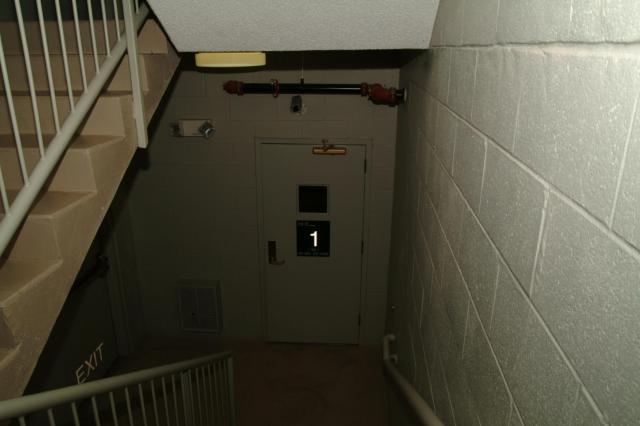
It's a security issue. Some people lock access to upper floors from the stairwell (you can exit the stairwell at the first floor or ground level) to control traffic, to prevent people from transiting from upper floor to upper floor via the stairwells or to prevent people (particularly undesirables) from occupying the stairwell (it's not unheard-of in some places to find a wino or street person, or worse, sleeping or loitering in one).
I've seen a few hotels in locations where I would do that. Going into a stairwell to sneak a smoke in a 'tobacco-free' building is one thing - I do it myself sometimes - but all I need to see is a couple knuckleheads in a stairwell smoking weed, and that's it . . . new door hardware goes on order the next day.
I assume you mean, they're locked from the inside, so you cannot enter a floor from the stairwell.
It's a security issue. Some people lock access to upper floors from the stairwell (you can exit the stairwell at the first floor or ground level) to control traffic, to prevent people from transiting from upper floor to upper floor via the stairwells or to prevent people (particularly undesirables) from occupying the stairwell (it's not unheard-of in some places to find a wino or street person, or worse, sleeping or loitering in one).
I've seen a few hotels in locations where I would do that. Going into a stairwell to sneak a smoke in a 'tobacco-free' building is one thing - I do it myself sometimes - but all I need to see is a couple knuckleheads in a stairwell smoking weed, and that's it . . . new door hardware goes on order the next day.
Thursday, January 26, 2017
What is the one feature, outside basic necessities like running water, that every hotel room should have?
A bed, some clean bedding, four walls, a floor, a roof, a clean bath, and a locking door.
And then, the question becomes, do you want to be able to rent the darn thing to human beings that you wouldn't mind having as guests? Because that's what it comes down to: each person measures their own 'need'. Define essential. Whatever item you name, you might feel very uncomfortable without it, even though not that many people feel the need for it. Or you could do without it just fine, but the guy next door will suffer through his stay for lack of it. (Do you actually watch all the channels you have on your cable TV? Yet, even if one of the 'amazing TV offers' channels were eliminated, someone would complain to the cable company.)

We once tried to come up with a hotel with bare-bones amenities, where we could rent the rooms cheap cheap. (Twitter was a new thing, then, and people seemed to like the little blue bird, so inspired by that, and the 'cheap cheap' description, we even came up with a brand for it: 'Bluebird Hotel'.)
I mean, we were downright shameless and aggressive about it, looking for every way in the book plus a few no book would dare print, to cut costs and make it possible to rent the rooms for forty bucks a night or under.
And then, the question becomes, do you want to be able to rent the darn thing to human beings that you wouldn't mind having as guests? Because that's what it comes down to: each person measures their own 'need'. Define essential. Whatever item you name, you might feel very uncomfortable without it, even though not that many people feel the need for it. Or you could do without it just fine, but the guy next door will suffer through his stay for lack of it. (Do you actually watch all the channels you have on your cable TV? Yet, even if one of the 'amazing TV offers' channels were eliminated, someone would complain to the cable company.)
We once tried to come up with a hotel with bare-bones amenities, where we could rent the rooms cheap cheap. (Twitter was a new thing, then, and people seemed to like the little blue bird, so inspired by that, and the 'cheap cheap' description, we even came up with a brand for it: 'Bluebird Hotel'.)
I mean, we were downright shameless and aggressive about it, looking for every way in the book plus a few no book would dare print, to cut costs and make it possible to rent the rooms for forty bucks a night or under.
Wednesday, January 25, 2017
Why are there phones in the bathrooms of some hotel rooms?
Because of some starry-eyed dreamer's silly idea of "what guests expect".
Why doesn't every hotel have a phone in the bath? We (at the mid-market and economy tier, anyway) have never had anyone ask for one nor complain because they didn't have one.
Maybe our hotels aren't as "nice", but we deal with a nicer class of people, so it all evens out.

Not to sound crude, but frankly, the utility value of such an amenity is something I don't regard as particularly healthy or intelligent. The scary part is that every such phone I've seen is a traditionally-styled phone with a handheld receiver. It's never a speakerphone that you can use while shaving or taking a shower (or, if a woman, applying makeup). That would seem to somewhat limit its potential use in a bath - and (other than, just maybe, if several people are in a room and one of them needs a place to talk on the phone privately, out of earshot of the others), I just don't find the one likely remaining use for it particularly appetizing (see Is it impolite to talk to somebody on the phone while defecating? ).
Why doesn't every hotel have a phone in the bath? We (at the mid-market and economy tier, anyway) have never had anyone ask for one nor complain because they didn't have one.
Maybe our hotels aren't as "nice", but we deal with a nicer class of people, so it all evens out.
Not to sound crude, but frankly, the utility value of such an amenity is something I don't regard as particularly healthy or intelligent. The scary part is that every such phone I've seen is a traditionally-styled phone with a handheld receiver. It's never a speakerphone that you can use while shaving or taking a shower (or, if a woman, applying makeup). That would seem to somewhat limit its potential use in a bath - and (other than, just maybe, if several people are in a room and one of them needs a place to talk on the phone privately, out of earshot of the others), I just don't find the one likely remaining use for it particularly appetizing (see Is it impolite to talk to somebody on the phone while defecating? ).
Why do many less expensive hotels/motels incorporate a sink into the bedroom?
I don't know exactly what the first architect to design a hotel room with that particular layout was thinking, but it makes sense at several levels (and in any hotel, not just a 'cheaper' one). The missus can brush her teeth or fix her hair while her husband is taking a shower or his morning constitutional, and vice versa. Ditto for any kids that they bring along. In a shared room, it's much more efficient.
This layout also allows the enclosed part of the bath to take up less space. Five-by-six ought to do. And the vanity top ends up taking up remaining space that would likely not be good for much else, anyway. So, the extra two-and-a-half feet of space can be added to the main part of the guestroom, where it is appreciated.

It's also more sanitary - much more. Every time you flush a toilet, a process called aerosolization occurs - it gives off a mist, not quite visible but still very much there, that covers everything within six feet or so, unless there is some barrier in between to close it off. (One prominent sanitarian would illustrate the effect by dumping a small bottle of blue food coloring into a clean toilet, covering the rim with Saran Wrap, then flushing: the underside of the Saran Wrap itself turned quite blue. Closing the lid on the toilet before you flush helps, but not that much.)
Most bathrooms are only five feet, or five feet and a few inches, wide, because that's the usual length of a bathtub. If you keep your toothbrush out in the open on the vanity top next to (or directly across the bathroom from) the toilet at home, guess what you're literally brushing your teeth with?
Not a pleasant thought . . . Did you want to know that much about it? :-)
Originally appeared on Quora
This layout also allows the enclosed part of the bath to take up less space. Five-by-six ought to do. And the vanity top ends up taking up remaining space that would likely not be good for much else, anyway. So, the extra two-and-a-half feet of space can be added to the main part of the guestroom, where it is appreciated.
It's also more sanitary - much more. Every time you flush a toilet, a process called aerosolization occurs - it gives off a mist, not quite visible but still very much there, that covers everything within six feet or so, unless there is some barrier in between to close it off. (One prominent sanitarian would illustrate the effect by dumping a small bottle of blue food coloring into a clean toilet, covering the rim with Saran Wrap, then flushing: the underside of the Saran Wrap itself turned quite blue. Closing the lid on the toilet before you flush helps, but not that much.)
Most bathrooms are only five feet, or five feet and a few inches, wide, because that's the usual length of a bathtub. If you keep your toothbrush out in the open on the vanity top next to (or directly across the bathroom from) the toilet at home, guess what you're literally brushing your teeth with?
Not a pleasant thought . . . Did you want to know that much about it? :-)
Originally appeared on Quora
Subscribe to:
Posts (Atom)