
Showing posts with label Employee working conditions. Show all posts
Showing posts with label Employee working conditions. Show all posts
Monday, July 9, 2018



The New England Patriots’ Indispensable Role
From Tim Elmore

 |
| ||||||
| tr> | |||||


|


| © 2018 Tim Elmore Growing Leaders 270 Scientific Drive NW Suite 10 Atlanta, Ga 30092 USA | No longer interested in these emails? You can unsubscribe here, or you can also change to weekly delivery Get this from a friend? Subscribe Now |
Monday, August 7, 2017
What is the difference between a 'guest relations officer' and a 'guest service provider' in a five star hotel?
Ask the hotel chain who has those titles posted on their job board.
Employers define their needs, they divide up the work that needs doing to meet those needs into individual jobs, they define those jobs and the accountabilities that go with each . . . and they dream up the titles for them. And you do have some very dreamy people in this business.
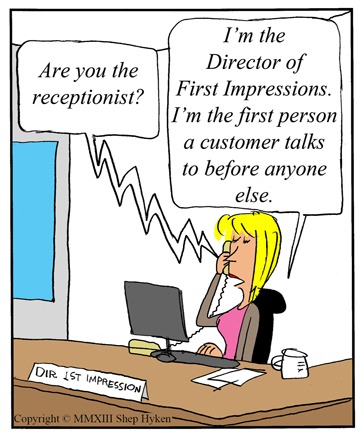
That's why W Hotels is always looking for “Go anywhere, do anything” people -- that's an actual job title. This past month, a Hilton Garden Inn near where I live was advertising for “Happy Morning People” to serve breakfast. A desk clerk can be a “guest services agent”, a “guest services representative”, a “host” or “hostess” (a breakfast server can also be a “host” or “hostess”), the list goes on and it's not standardized for every hotel. Even Walmart refers to its employees as “associates”, as though being a low paid hourly “associate” at a high-pressure job adds dignity to it when you have to apply for food stamps to feed your kids because you can't do it on what they pay you.
Employers define their needs, they divide up the work that needs doing to meet those needs into individual jobs, they define those jobs and the accountabilities that go with each . . . and they dream up the titles for them. And you do have some very dreamy people in this business.
That's why W Hotels is always looking for “Go anywhere, do anything” people -- that's an actual job title. This past month, a Hilton Garden Inn near where I live was advertising for “Happy Morning People” to serve breakfast. A desk clerk can be a “guest services agent”, a “guest services representative”, a “host” or “hostess” (a breakfast server can also be a “host” or “hostess”), the list goes on and it's not standardized for every hotel. Even Walmart refers to its employees as “associates”, as though being a low paid hourly “associate” at a high-pressure job adds dignity to it when you have to apply for food stamps to feed your kids because you can't do it on what they pay you.
Wednesday, May 24, 2017
This isn't just a Starbucks disease
Many hotels are bad about it, too.
Business Insider article: Starbucks is quietly changing the business as furious baristas slam the 'cult that pays $9 per hour'

No matter what the 'benefits' are, their value will show up as nebulous if you're not paying a living wage.
Business Insider article: Starbucks is quietly changing the business as furious baristas slam the 'cult that pays $9 per hour'
Observations:
We've seen this before: Management wants to micromanage the customer experience and leans too heavily upon 'service' and connection (which you can't force). Some even attempt to use it to cover inadequacies in the operation or facility itself. It makes any employee exposed to culpability for anything, and makes for a very unhealthy work environment.No matter what the 'benefits' are, their value will show up as nebulous if you're not paying a living wage.
Thursday, February 16, 2017
When an employee threatens to resign and uses it as a negotiating tool, what is the ideal response from HR managers or company management?
"There's the freakin' door . . . It's even got a backlighted sign mounted over it telling you in simple, one-step instructions exactly what you can do with it."
If someone has a legitimate (or at least respectable) grievance, or reasonable provocation, I can see them getting a little wound up. In that event, they really shouldn't have to make the threat: it could be, they're just getting emotional . . .

But as a negotiating tool? Don't let the door hit you where Mother Nature split you.
If they even make the attempt (in the form of a threat, rather than just describing an option if they do happen to have prospects elsewhere), it's highly questionable whether they need to be working there to begin with. I once had an employment lawyer share with me that, in every single case of employment-related litigation that crossed his desk it invariably developed, once all the potential witnesses are interviewed and discovery is completed, that the employment situation with that particular employee had broken down long ago and had not been working out for either the employer or the employee for quite some time. Whatever actually precipitated the termination, or the angry resignation, and the ensuing lawsuit was merely the catalyst, the 'final straw'.
If someone has a legitimate (or at least respectable) grievance, or reasonable provocation, I can see them getting a little wound up. In that event, they really shouldn't have to make the threat: it could be, they're just getting emotional . . .
But as a negotiating tool? Don't let the door hit you where Mother Nature split you.
If they even make the attempt (in the form of a threat, rather than just describing an option if they do happen to have prospects elsewhere), it's highly questionable whether they need to be working there to begin with. I once had an employment lawyer share with me that, in every single case of employment-related litigation that crossed his desk it invariably developed, once all the potential witnesses are interviewed and discovery is completed, that the employment situation with that particular employee had broken down long ago and had not been working out for either the employer or the employee for quite some time. Whatever actually precipitated the termination, or the angry resignation, and the ensuing lawsuit was merely the catalyst, the 'final straw'.
Wednesday, February 1, 2017
How bad are these hotel housekeeping lapses?
How bad, as in 'how dangerous', or 'how extremely gross'? Not very. Usually, when they occur, they're pretty obvious, like the ones you mentioned. Usually, someone, often a guest, will spot something with the potential for extreme grossness before it gets too gross. Even the less obvious ones - dust across the top of a picture frames, film in the tub, grunge around the base of the toilet, something under a bed (beds should be on box bases, not angle-iron frames; but in some hotels, some still aren't) - are pretty obvious if someone just looks.

As far as dangerous or extremely gross goes, the worst I've seen - at separate incidents, in separate hotels of varying quality - were sharp objects left laying around: once the blade of a carpet knife left in the floor of a room where the carpetlayers weren't doing a very good job of picking up behind themselves (the hotel was being remodeled on the fly) resulting in injury to a guest; another time a hypodermic syringe left in the drawer of a nightstand (fortunately no injury beyond a disgusted guest who demanded a refund right away, although I'm aware of a situation that did occur at a Motel 6 in Virginia Beach where a small child had an unpleasant encounter with a previous guest's syringe while crawling around in the floor, and had to be hospitalized).
As far as dangerous or extremely gross goes, the worst I've seen - at separate incidents, in separate hotels of varying quality - were sharp objects left laying around: once the blade of a carpet knife left in the floor of a room where the carpetlayers weren't doing a very good job of picking up behind themselves (the hotel was being remodeled on the fly) resulting in injury to a guest; another time a hypodermic syringe left in the drawer of a nightstand (fortunately no injury beyond a disgusted guest who demanded a refund right away, although I'm aware of a situation that did occur at a Motel 6 in Virginia Beach where a small child had an unpleasant encounter with a previous guest's syringe while crawling around in the floor, and had to be hospitalized).
Saturday, January 28, 2017
As a newly appointed manager at a store with mainly college students as employees (I myself am 22), how do I assert my new authority without the transition being too harsh or uncomfortable for all involved?
Don't worry about your authority. Your only concern is getting the job done. Okay, you have this store to run, you have these (however many) people to help . . .

Stay focused on objectives, not your 'position'. Everyone can buy into objectives. No one cares, or wants to care, about anyone's position. You can walk on water without getting your feet wet and still have people not wanting to buy into your 'position' . . .
Originally appeared on Quora
Stay focused on objectives, not your 'position'. Everyone can buy into objectives. No one cares, or wants to care, about anyone's position. You can walk on water without getting your feet wet and still have people not wanting to buy into your 'position' . . .
Originally appeared on Quora
Is backstabbing a fundamental part of capitalism? (It seems that "The 48 Laws of Power" are a very effective set of tools that most mediocre minded people follow to dishonorable success, is this true? Are only a small percentage of entrepreneurs fair?)
I haven't read the book and can't comment on it. And I really can't say what percentage of entrepreneurs can be described as 'fair', because I try to deal only with those who are fair to me, deal only if I have to with those who aren't (and watch them), and don't keep a count.

But let me share a secret with you. Capitalism is about making money, by either creating and offering something of value that people are willing to pay for, or by connecting people and setting up trade in a more efficient way that the participants are willing to pay for. It's not about power. It's not about manipulation, domination, and control. It's not about getting into bitch fights with other companies (particularly competitors) or your co-workers at the office, and 'ruining' them or 'destroying' them, as depicted on the Dallas TV series from the '80's (the J. R. Ewing character was quite the poster child for that) and several other sitcoms that have come and gone on prime time since. (Yes, I said 'sitcoms'. Well, I got a good laugh out of some of the stuff that happens in them.). It's not about politics, and it's certainly not about crappy politics, brownnosing and backstabbing. You see stuff like that frequently. But it's not what capitalism, or 'advancing in your career' if you're an 'intermural' player, is all about.
How many room attendants needed to clean 150 guest rooms in a hotel?
In a 150-room hotel (which is larger than the 60 to 80 rooms we recommend building in most places, and the only reason we'd plan on that many is if there were going to be meeting and banquet facilities attached) that stays pretty full, I'd plan on eleven to maybe thirteen or fourteen housekeepers.
In hotel housekeeping, there's this weird thing about the number fourteen: that's how many rooms that most housekeepers like to make per day. I've seen some who'll do 20 or more rooms, and still do a good job.

(Generally, it should take 30 minutes for a standard hotel room with the usual furnishings, if the guest checks out; and 15 minutes for a guest staying over. [Stephanie De La Rosa's answer to What is the average amount of time housekeeping spends per room to prepare a hotel room for a new guest? ] I allow 35 minutes for a checkout, 20 minutes for a stayover, and have the night auditor pull the housekeepers' time records and do the math on it every night. My housekeeping supervisor knows - and passes it along to all the girls - that if it takes more than that, I'm going to want to know why. I'm okay with it if they actually spent the time doing useful work that needed doing, or even if one or two of them had a bad day and things took longer than usual; but I, too, have to be able to justify my payroll costs.)
In hotel housekeeping, there's this weird thing about the number fourteen: that's how many rooms that most housekeepers like to make per day. I've seen some who'll do 20 or more rooms, and still do a good job.
(Generally, it should take 30 minutes for a standard hotel room with the usual furnishings, if the guest checks out; and 15 minutes for a guest staying over. [Stephanie De La Rosa's answer to What is the average amount of time housekeeping spends per room to prepare a hotel room for a new guest? ] I allow 35 minutes for a checkout, 20 minutes for a stayover, and have the night auditor pull the housekeepers' time records and do the math on it every night. My housekeeping supervisor knows - and passes it along to all the girls - that if it takes more than that, I'm going to want to know why. I'm okay with it if they actually spent the time doing useful work that needed doing, or even if one or two of them had a bad day and things took longer than usual; but I, too, have to be able to justify my payroll costs.)
Thursday, January 26, 2017
If workers are generally happy, why should they be forced to join a union? Aren't right-to-work laws a good thing?
Unions exist in a workplace because a majority of employees, at the time the union was voted in, voted them in. This question presupposes that the union was voted in even though employees were generally happy without one.
It also presupposes that anyone is forced to join a union.
No one is forced to join a union. But at some workplaces, where a union has been designated by the employees to bargain collectively on their behalf, you must either be part of the union, or allow them to bargain for you in many areas. If you object, seek employment elsewhere: it's part of the terms of working there.
It's like having to report to a manager or supervisor you dislike, or comply with work rules you find objectionable: you're not 'forced', but if you want to work there, that's what you're going to have to deal with.
 "Right-to-work" laws guarantee no one's right to work - indeed they exist, in part, to lock "employment-at-will" in place. Right-to-work laws simply provide that employees may not be required, as a condition of employment, to participate in or pay dues or fees to a labor organization.
It also presupposes that anyone is forced to join a union.
No one is forced to join a union. But at some workplaces, where a union has been designated by the employees to bargain collectively on their behalf, you must either be part of the union, or allow them to bargain for you in many areas. If you object, seek employment elsewhere: it's part of the terms of working there.
It's like having to report to a manager or supervisor you dislike, or comply with work rules you find objectionable: you're not 'forced', but if you want to work there, that's what you're going to have to deal with.
Wednesday, January 25, 2017
How do hotels charge? (e.g., check-in is 1pm, check-out is 11am. If I am checking in at 3pm on Friday and leaving 10am Monday, how am I charged? Four days and three nights; or am I charged four full days?)
For your example, you get charged three nights.
To answer your question in a single sentence, if you don't want to know that much about it; your room, and any taxes that you pay on it, are applied at four a.m., give or take an hour, when we do the night audit. If you check out before the night audit, they will be manually applied. If you don't arrive until after the audit, they will be manually applied, and show up on the next day's revenue at the following night's night audit. (If the fact that you stayed four days, three nights, is a source of confusion, it's because we charge you per night, not per day.)
Still confused? Okay, Hotel Night Audit 101 coming up . . .
Each guest account (whether in-house, direct bill, or advance deposit), works just like your checking account at the bank.
Note the similarities between your check register (above) and a guest folio (below), that is, your 'bill' . . .
If I purchase packaged food during a trip, never open it, and leave it in my hotel room when checking out, will the staff be permitted to eat it?
I'd rather they didn't, but I can't stop them, and they do it at their own risk. (I have no control over what they eat or how they procure their food outside the hotel, or during their off-duty time, either.) Perishable items are never left behind, and the best thing to do with them in a lot of cases is to throw them out, but that's going to be a little counterintuitive to a low-paid employee who sees an unopened food item that would otherwise go to waste.

We have policies that require high-value items to be turned in to lost and found, and that forbid taking any item from the hotel that you did not bring with you without permission; but if I were staying in a hotel and left behind an unopened bag of cookies or chips, or a couple of unopened beers in a six-pack, I wouldn't count on ever seeing them again.
We have policies that require high-value items to be turned in to lost and found, and that forbid taking any item from the hotel that you did not bring with you without permission; but if I were staying in a hotel and left behind an unopened bag of cookies or chips, or a couple of unopened beers in a six-pack, I wouldn't count on ever seeing them again.
Originally appeared on Quora
Why don't we make the minimum wage in the US $100 an hour? That would get rid of poverty!
Because you don't want to pay $1000-2000 per night for a hotel room.
Minimum-wage laws are inflationary. A mandatory ten-fold increase in wages can only be dealt with by means of generating a nearly ten-fold increase in the revenues needed to pay it -- meaning that we lay on a nearly ten-fold increase in prices to consumers.
They don't really help the people they're intended to help. No one really benefits any from raises in the minimum wage for low-end wage earners except for low-end landlords (most often, slumlords who shouldn't be allowed to be landlords, at that) - the rent goes up to wipe out the increased income of the low-end tenants.
The minimum-wage model is not a good model at all to insure a living wage for workers at the lower end of the pay scale.
Here, try this instead - I bet it would work:
How do I play office politics in order to get promoted at my office?
However you want, for as long as you last.
And if you're really good at it, you won't get caught: that's the nature of manipulation. Good luck with it.

We have a test that we give out to our employees a couple of times a year -- more often if we suspect a problem -- that I originally read about in a book about the Israeli Defense Forces years ago.
We have a test that we give out to our employees a couple of times a year -- more often if we suspect a problem -- that I originally read about in a book about the Israeli Defense Forces years ago.
It's a major factor in how they select their officers. One thing about the IDF with which I've always been impressed, is how all of their officers begin as enlistees, starting at the very bottom; unlike American and British and Commonwealth forces that automatically put college graduates on an officer track, and just as arbitrarily consider anyone without a four-year degree as unqualified for any more than enlisted service: regardless of eventual experience, achievement or performance. (E-9, Sergeant Major or Master Chief -- which is still quite respectable -- is as high as he can go, unless, of course, he earns a degree while he's in service). As a college dropout who has frequently missed opportunities and experienced stalled career progression over the years for lack of a degree, my own very strong feelings are that there must be a better, more effective, more fair, and less arbitrary way to spot people with talent and potential; and that's what I want very much for any company that I run. If you're my competitor, go right ahead and mindlessly refuse to put anyone other than 'highly qualified' college pukes in your company's key positions. I'll have just the right people, with the precise skills, abilities and talent that I need -- including, perhaps, some of your rejects -- and I'll blow past you so fast that, despite our focus on what really matters, we'll actually regret just a little that we were moving too fast to see the look on your face as we passed you.
Considering the capabilities of that testing system, I'm thinking, if they give it to every guy in the Israeli army, how much of a secret can it be? And wouldn't it be really great to get a copy of that test and adapt it for use in an American workplace? And, it turns out, it's no secret, it's freely available. The only thing noteworthy about the IDF's use of it is that back in the sixties when they discovered it, they picked up on it and ran with it. A few American companies use it as well. It's very open-source: the psychologists who developed it have shared it around even more freely than Myers-Briggs. You can draw up the test yourself in accordance with the prescribed format, administer it, and there's a cheap shareware download that you can use to score it (the scoring algorithm is the only part to which there's any complexity at all).
Why don't hotels allow you to tip the maid on your final bill?
It’s not an altogether bad idea, although it has its bugs to work out. We should maybe try it in properties that will operate under our own brands.
I would guess that the biggest thing in the way of it at most hotels is that the select service/limited service hotel business model — with which most hotels line up nowadays, although some full-service hotels remain — was designed, in part, to eliminate tipped employees in hotels.
Getting us away from tipped employees was just one part of the overall campaign to simplify the hotel operation, make it possible to make most of the revenue on rooms rather than food, beverage on banquets, eliminate the high-overhead restaurant and bar and see if people could make do with a complimentary, easy-to-prepare buffet breakfast instead, and keep everything at a single, moderate if not altogether low, price for the guest.
One thing they definitely wanted to get away from was the number of employees in a hotel — the doorman, the bellman, the wait staff at the hotel restaurant, the washroom attendant, the guy in the fitness room — who always seemed to have their hand out to the guests.
That’s respectable. Tipped employees can be a little much in the sort of establishment where it’s a problem (although I’m older and wiser now, and don’t patronize “gentlemens’ clubs” any more).
Tuesday, January 24, 2017
Is it illegal for a housekeeper to clean 40 hotel rooms per day?
Probably not, but about half that many, not much more, is the most I’ve ever seen a housekeeping department in any hotel do, and do a halfway decent job of getting them done, on a day-to-day basis; and that was at a very unhappy property with a TripAdvisor bubble score of 2.5 to 3. Even that’s going to keep them there close to ten hours per day.

I’ve had one room attendant go as high as 32 in a day (and that kept her there until nine in the evening), but that was only for one day, and in extraordinary conditions (full house the night before, another one checking in, and too many room attendants didn’t make it to work that day).
I try to schedule them for 14 rooms per day, not much more. Exceed that and they complain because you’re overworking them, and they rush and they miss things. If you don’t give them close to that many, you’re screwing them on hours.
Originally appeared on Quora
I’ve had one room attendant go as high as 32 in a day (and that kept her there until nine in the evening), but that was only for one day, and in extraordinary conditions (full house the night before, another one checking in, and too many room attendants didn’t make it to work that day).
I try to schedule them for 14 rooms per day, not much more. Exceed that and they complain because you’re overworking them, and they rush and they miss things. If you don’t give them close to that many, you’re screwing them on hours.
Originally appeared on Quora
Subscribe to:
Posts (Atom)