
Showing posts with label Employee relations. Show all posts
Showing posts with label Employee relations. Show all posts
Monday, July 9, 2018


What do you find is the hardest thing about having to fire someone?
Doing it right.
There are a thousand or so ways to make a mistake and do it wrong, some of which can get you in a lot of legal trouble, others of which can buy you lots of nuisance-level consequences and repercussions for months or years afterward. (We won’t even go there about the possibility of provoking repercussions that constitute security threats to your company, property or staff — ever hear the term “Going postal”? . . .)
And the one way to do it right seems to vary by individual.
What I want above all else is a clean break. Have the employee move on, and have something to move on to, and have that departing employee quietly float away. It may be possible that time heals all wounds, and nothing would please me more than to have exactly that happen eventually, and we can meet again amicably and achieve some partial reconciliation, and no hard feelings in the interim; but on this day, until I’m sure there are no hard feelings, I never want to hear from that person in the foreseeable future.

In a perfect world . . .
But in most cases, achieving all of this requires a world more perfect than the one you and I live in. Not even Jesus Christ, who was the Son of God and had all of the attributes of God while also being fully human, who literally needed no reference checks, who “did not need anyone to tell him what a person was like. He already knew” (John 2:25 - Easy-to-Read Version ); could select twelve guys to carry His message into the world and continue His work after He was gone without getting a Judas in the bunch. In a really perfect world, you’d never make a bad hire, an employee would never fail at his training or have performance problems or develop issues or fall into temptation and go bad on you, and no one would get fired at all.
There are a thousand or so ways to make a mistake and do it wrong, some of which can get you in a lot of legal trouble, others of which can buy you lots of nuisance-level consequences and repercussions for months or years afterward. (We won’t even go there about the possibility of provoking repercussions that constitute security threats to your company, property or staff — ever hear the term “Going postal”? . . .)
And the one way to do it right seems to vary by individual.
What I want above all else is a clean break. Have the employee move on, and have something to move on to, and have that departing employee quietly float away. It may be possible that time heals all wounds, and nothing would please me more than to have exactly that happen eventually, and we can meet again amicably and achieve some partial reconciliation, and no hard feelings in the interim; but on this day, until I’m sure there are no hard feelings, I never want to hear from that person in the foreseeable future.
In a perfect world . . .
- Everyone all around — including the departing employee — would agree that the situation isn’t working, and that it's best for all that we have a parting of the ways.
- The departing employee would move on with his or her life, and have something to move on to that would have him or her content to move on with his or her life, and never look back. I don’t want any ‘disgruntled former employees’ running around loose in the world.
- The impact of the termination upon the departing employee would be limited to the discontinuation of his or her employment by our company. No wipeout of any savings he has from the sudden loss of his income, no eviction because she couldn’t pay the rent, her kids don’t suffer because there’s no longer enough income to keep food in the house, no cars repossessed because he gets behind on the payments, no difficulty finding future employment because of a bad or questionable reference.
- It all gets done without pushback, resistance or a bad fight on the part of the departing employee — and the departing employee doesn’t try to leverage our commitment to get it done clean, quietly and without any problems, against us.
- There would never be any hard feelings, or grounds for hard feelings. Everyone goes their way, complete.
But in most cases, achieving all of this requires a world more perfect than the one you and I live in. Not even Jesus Christ, who was the Son of God and had all of the attributes of God while also being fully human, who literally needed no reference checks, who “did not need anyone to tell him what a person was like. He already knew” (John 2:25 - Easy-to-Read Version ); could select twelve guys to carry His message into the world and continue His work after He was gone without getting a Judas in the bunch. In a really perfect world, you’d never make a bad hire, an employee would never fail at his training or have performance problems or develop issues or fall into temptation and go bad on you, and no one would get fired at all.


The New England Patriots’ Indispensable Role
From Tim Elmore

 |
| ||||||
| tr> | |||||


|


| © 2018 Tim Elmore Growing Leaders 270 Scientific Drive NW Suite 10 Atlanta, Ga 30092 USA | No longer interested in these emails? You can unsubscribe here, or you can also change to weekly delivery Get this from a friend? Subscribe Now |
Monday, August 7, 2017
What is the difference between a 'guest relations officer' and a 'guest service provider' in a five star hotel?
Ask the hotel chain who has those titles posted on their job board.
Employers define their needs, they divide up the work that needs doing to meet those needs into individual jobs, they define those jobs and the accountabilities that go with each . . . and they dream up the titles for them. And you do have some very dreamy people in this business.
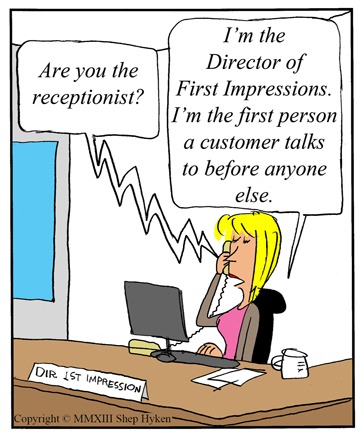
That's why W Hotels is always looking for “Go anywhere, do anything” people -- that's an actual job title. This past month, a Hilton Garden Inn near where I live was advertising for “Happy Morning People” to serve breakfast. A desk clerk can be a “guest services agent”, a “guest services representative”, a “host” or “hostess” (a breakfast server can also be a “host” or “hostess”), the list goes on and it's not standardized for every hotel. Even Walmart refers to its employees as “associates”, as though being a low paid hourly “associate” at a high-pressure job adds dignity to it when you have to apply for food stamps to feed your kids because you can't do it on what they pay you.
Employers define their needs, they divide up the work that needs doing to meet those needs into individual jobs, they define those jobs and the accountabilities that go with each . . . and they dream up the titles for them. And you do have some very dreamy people in this business.
That's why W Hotels is always looking for “Go anywhere, do anything” people -- that's an actual job title. This past month, a Hilton Garden Inn near where I live was advertising for “Happy Morning People” to serve breakfast. A desk clerk can be a “guest services agent”, a “guest services representative”, a “host” or “hostess” (a breakfast server can also be a “host” or “hostess”), the list goes on and it's not standardized for every hotel. Even Walmart refers to its employees as “associates”, as though being a low paid hourly “associate” at a high-pressure job adds dignity to it when you have to apply for food stamps to feed your kids because you can't do it on what they pay you.
Thursday, February 16, 2017
What are some of the best ways to control attrition in restaurants and hospitality industry?
Authenticity. Real caring. Real respect. Real commitment. Real training. Starting with you. Treat your people like people, not objects to be manipulated, machines to perform mechanical functions, or puppets to perform on a string. Be real yourself, know the difference between real and phony, and don't reward or promote the phony.
If this doesn't sound much like a 'professional' 'service program' or 'employee engagement program', it's the best you're going to get out of me. I don't like such commercially produced programs. I can't make one and give it to you. A 'store-bought' solution won't work (although many are out there - I wish I had a quarter for every off-the-shelf whiz-bang program developed by some starry-eyed dreamer, and a dollar for every hundred-dollar-an-hour consultant offering one.). It has to come from you and your company.
Otherwise, it's counterproductive. Would such a program or scheme motivate you? If hearing the magic words in its message goes right over your head, puts you to sleep, or (worst of all) sets off your own crap detector, you can bet it will do the same with your hourly help. And if you haven't spent an evening shift with your desk clerk, an eleven-to-seven shift with your night auditor, or a day with one of your room attendants at the location at which you plan to use it, you have no business even shopping for one.

Nearly all of them are dreamed up by people who have no idea what it's like to work in your workplace and deal with the day-to-day reality of it. Your staff will know this as soon as they begin hearing or reading the material presented to them.
If this doesn't sound much like a 'professional' 'service program' or 'employee engagement program', it's the best you're going to get out of me. I don't like such commercially produced programs. I can't make one and give it to you. A 'store-bought' solution won't work (although many are out there - I wish I had a quarter for every off-the-shelf whiz-bang program developed by some starry-eyed dreamer, and a dollar for every hundred-dollar-an-hour consultant offering one.). It has to come from you and your company.
Otherwise, it's counterproductive. Would such a program or scheme motivate you? If hearing the magic words in its message goes right over your head, puts you to sleep, or (worst of all) sets off your own crap detector, you can bet it will do the same with your hourly help. And if you haven't spent an evening shift with your desk clerk, an eleven-to-seven shift with your night auditor, or a day with one of your room attendants at the location at which you plan to use it, you have no business even shopping for one.
Nearly all of them are dreamed up by people who have no idea what it's like to work in your workplace and deal with the day-to-day reality of it. Your staff will know this as soon as they begin hearing or reading the material presented to them.
When an employee threatens to resign and uses it as a negotiating tool, what is the ideal response from HR managers or company management?
"There's the freakin' door . . . It's even got a backlighted sign mounted over it telling you in simple, one-step instructions exactly what you can do with it."
If someone has a legitimate (or at least respectable) grievance, or reasonable provocation, I can see them getting a little wound up. In that event, they really shouldn't have to make the threat: it could be, they're just getting emotional . . .

But as a negotiating tool? Don't let the door hit you where Mother Nature split you.
If they even make the attempt (in the form of a threat, rather than just describing an option if they do happen to have prospects elsewhere), it's highly questionable whether they need to be working there to begin with. I once had an employment lawyer share with me that, in every single case of employment-related litigation that crossed his desk it invariably developed, once all the potential witnesses are interviewed and discovery is completed, that the employment situation with that particular employee had broken down long ago and had not been working out for either the employer or the employee for quite some time. Whatever actually precipitated the termination, or the angry resignation, and the ensuing lawsuit was merely the catalyst, the 'final straw'.
If someone has a legitimate (or at least respectable) grievance, or reasonable provocation, I can see them getting a little wound up. In that event, they really shouldn't have to make the threat: it could be, they're just getting emotional . . .
But as a negotiating tool? Don't let the door hit you where Mother Nature split you.
If they even make the attempt (in the form of a threat, rather than just describing an option if they do happen to have prospects elsewhere), it's highly questionable whether they need to be working there to begin with. I once had an employment lawyer share with me that, in every single case of employment-related litigation that crossed his desk it invariably developed, once all the potential witnesses are interviewed and discovery is completed, that the employment situation with that particular employee had broken down long ago and had not been working out for either the employer or the employee for quite some time. Whatever actually precipitated the termination, or the angry resignation, and the ensuing lawsuit was merely the catalyst, the 'final straw'.
Saturday, January 28, 2017
As a newly appointed manager at a store with mainly college students as employees (I myself am 22), how do I assert my new authority without the transition being too harsh or uncomfortable for all involved?
Don't worry about your authority. Your only concern is getting the job done. Okay, you have this store to run, you have these (however many) people to help . . .

Stay focused on objectives, not your 'position'. Everyone can buy into objectives. No one cares, or wants to care, about anyone's position. You can walk on water without getting your feet wet and still have people not wanting to buy into your 'position' . . .
Originally appeared on Quora
Stay focused on objectives, not your 'position'. Everyone can buy into objectives. No one cares, or wants to care, about anyone's position. You can walk on water without getting your feet wet and still have people not wanting to buy into your 'position' . . .
Originally appeared on Quora
Is backstabbing a fundamental part of capitalism? (It seems that "The 48 Laws of Power" are a very effective set of tools that most mediocre minded people follow to dishonorable success, is this true? Are only a small percentage of entrepreneurs fair?)
I haven't read the book and can't comment on it. And I really can't say what percentage of entrepreneurs can be described as 'fair', because I try to deal only with those who are fair to me, deal only if I have to with those who aren't (and watch them), and don't keep a count.

But let me share a secret with you. Capitalism is about making money, by either creating and offering something of value that people are willing to pay for, or by connecting people and setting up trade in a more efficient way that the participants are willing to pay for. It's not about power. It's not about manipulation, domination, and control. It's not about getting into bitch fights with other companies (particularly competitors) or your co-workers at the office, and 'ruining' them or 'destroying' them, as depicted on the Dallas TV series from the '80's (the J. R. Ewing character was quite the poster child for that) and several other sitcoms that have come and gone on prime time since. (Yes, I said 'sitcoms'. Well, I got a good laugh out of some of the stuff that happens in them.). It's not about politics, and it's certainly not about crappy politics, brownnosing and backstabbing. You see stuff like that frequently. But it's not what capitalism, or 'advancing in your career' if you're an 'intermural' player, is all about.
How many room attendants needed to clean 150 guest rooms in a hotel?
In a 150-room hotel (which is larger than the 60 to 80 rooms we recommend building in most places, and the only reason we'd plan on that many is if there were going to be meeting and banquet facilities attached) that stays pretty full, I'd plan on eleven to maybe thirteen or fourteen housekeepers.
In hotel housekeeping, there's this weird thing about the number fourteen: that's how many rooms that most housekeepers like to make per day. I've seen some who'll do 20 or more rooms, and still do a good job.

(Generally, it should take 30 minutes for a standard hotel room with the usual furnishings, if the guest checks out; and 15 minutes for a guest staying over. [Stephanie De La Rosa's answer to What is the average amount of time housekeeping spends per room to prepare a hotel room for a new guest? ] I allow 35 minutes for a checkout, 20 minutes for a stayover, and have the night auditor pull the housekeepers' time records and do the math on it every night. My housekeeping supervisor knows - and passes it along to all the girls - that if it takes more than that, I'm going to want to know why. I'm okay with it if they actually spent the time doing useful work that needed doing, or even if one or two of them had a bad day and things took longer than usual; but I, too, have to be able to justify my payroll costs.)
In hotel housekeeping, there's this weird thing about the number fourteen: that's how many rooms that most housekeepers like to make per day. I've seen some who'll do 20 or more rooms, and still do a good job.
(Generally, it should take 30 minutes for a standard hotel room with the usual furnishings, if the guest checks out; and 15 minutes for a guest staying over. [Stephanie De La Rosa's answer to What is the average amount of time housekeeping spends per room to prepare a hotel room for a new guest? ] I allow 35 minutes for a checkout, 20 minutes for a stayover, and have the night auditor pull the housekeepers' time records and do the math on it every night. My housekeeping supervisor knows - and passes it along to all the girls - that if it takes more than that, I'm going to want to know why. I'm okay with it if they actually spent the time doing useful work that needed doing, or even if one or two of them had a bad day and things took longer than usual; but I, too, have to be able to justify my payroll costs.)
Thursday, January 26, 2017
If workers are generally happy, why should they be forced to join a union? Aren't right-to-work laws a good thing?
Unions exist in a workplace because a majority of employees, at the time the union was voted in, voted them in. This question presupposes that the union was voted in even though employees were generally happy without one.
It also presupposes that anyone is forced to join a union.
No one is forced to join a union. But at some workplaces, where a union has been designated by the employees to bargain collectively on their behalf, you must either be part of the union, or allow them to bargain for you in many areas. If you object, seek employment elsewhere: it's part of the terms of working there.
It's like having to report to a manager or supervisor you dislike, or comply with work rules you find objectionable: you're not 'forced', but if you want to work there, that's what you're going to have to deal with.
 "Right-to-work" laws guarantee no one's right to work - indeed they exist, in part, to lock "employment-at-will" in place. Right-to-work laws simply provide that employees may not be required, as a condition of employment, to participate in or pay dues or fees to a labor organization.
It also presupposes that anyone is forced to join a union.
No one is forced to join a union. But at some workplaces, where a union has been designated by the employees to bargain collectively on their behalf, you must either be part of the union, or allow them to bargain for you in many areas. If you object, seek employment elsewhere: it's part of the terms of working there.
It's like having to report to a manager or supervisor you dislike, or comply with work rules you find objectionable: you're not 'forced', but if you want to work there, that's what you're going to have to deal with.
Wednesday, January 25, 2017
How do I play office politics in order to get promoted at my office?
However you want, for as long as you last.
And if you're really good at it, you won't get caught: that's the nature of manipulation. Good luck with it.

We have a test that we give out to our employees a couple of times a year -- more often if we suspect a problem -- that I originally read about in a book about the Israeli Defense Forces years ago.
We have a test that we give out to our employees a couple of times a year -- more often if we suspect a problem -- that I originally read about in a book about the Israeli Defense Forces years ago.
It's a major factor in how they select their officers. One thing about the IDF with which I've always been impressed, is how all of their officers begin as enlistees, starting at the very bottom; unlike American and British and Commonwealth forces that automatically put college graduates on an officer track, and just as arbitrarily consider anyone without a four-year degree as unqualified for any more than enlisted service: regardless of eventual experience, achievement or performance. (E-9, Sergeant Major or Master Chief -- which is still quite respectable -- is as high as he can go, unless, of course, he earns a degree while he's in service). As a college dropout who has frequently missed opportunities and experienced stalled career progression over the years for lack of a degree, my own very strong feelings are that there must be a better, more effective, more fair, and less arbitrary way to spot people with talent and potential; and that's what I want very much for any company that I run. If you're my competitor, go right ahead and mindlessly refuse to put anyone other than 'highly qualified' college pukes in your company's key positions. I'll have just the right people, with the precise skills, abilities and talent that I need -- including, perhaps, some of your rejects -- and I'll blow past you so fast that, despite our focus on what really matters, we'll actually regret just a little that we were moving too fast to see the look on your face as we passed you.
Considering the capabilities of that testing system, I'm thinking, if they give it to every guy in the Israeli army, how much of a secret can it be? And wouldn't it be really great to get a copy of that test and adapt it for use in an American workplace? And, it turns out, it's no secret, it's freely available. The only thing noteworthy about the IDF's use of it is that back in the sixties when they discovered it, they picked up on it and ran with it. A few American companies use it as well. It's very open-source: the psychologists who developed it have shared it around even more freely than Myers-Briggs. You can draw up the test yourself in accordance with the prescribed format, administer it, and there's a cheap shareware download that you can use to score it (the scoring algorithm is the only part to which there's any complexity at all).
Is there a way out of endless hospitality/customer-facing circle?
Is having to deal with customers something that’s not working for you, or do you just want a 9-to-5 job in a supporting accountability? It makes a difference.

There’s no way to get away from dealing with guests if you work in a hotel. And you won’t get completely away from it as a business travel consultant, and certainly not as a reservationist. (I’m a bit of an introvert and let’s face it, that’s not always my favorite part of it. It doesn’t come naturally to me, I have to work at it. But it’s something I have to be able to do well at a certain level . . .)
Tuesday, January 24, 2017
Is it illegal for a housekeeper to clean 40 hotel rooms per day?
Probably not, but about half that many, not much more, is the most I’ve ever seen a housekeeping department in any hotel do, and do a halfway decent job of getting them done, on a day-to-day basis; and that was at a very unhappy property with a TripAdvisor bubble score of 2.5 to 3. Even that’s going to keep them there close to ten hours per day.

I’ve had one room attendant go as high as 32 in a day (and that kept her there until nine in the evening), but that was only for one day, and in extraordinary conditions (full house the night before, another one checking in, and too many room attendants didn’t make it to work that day).
I try to schedule them for 14 rooms per day, not much more. Exceed that and they complain because you’re overworking them, and they rush and they miss things. If you don’t give them close to that many, you’re screwing them on hours.
Originally appeared on Quora
I’ve had one room attendant go as high as 32 in a day (and that kept her there until nine in the evening), but that was only for one day, and in extraordinary conditions (full house the night before, another one checking in, and too many room attendants didn’t make it to work that day).
I try to schedule them for 14 rooms per day, not much more. Exceed that and they complain because you’re overworking them, and they rush and they miss things. If you don’t give them close to that many, you’re screwing them on hours.
Originally appeared on Quora
Subscribe to:
Posts (Atom)