Showing posts with label Franchises and franchising. Show all posts

Tuesday, August 29, 2017

Hotels for sale: Red Lion Inn and Suites, Fayetteville NC

Property offering:

Listing broker: Paramount Lodging Advisors, via Ten-X

Red Lion Inn and Suites, Fayetteville – Paramount Lodging page
Red Lion Inn and Suites, Fayetteville – Ten-X page

This property is an early generation Hampton Inn exterior corridor prototype. Wherever you find one of these, the box is usually pretty well-built.
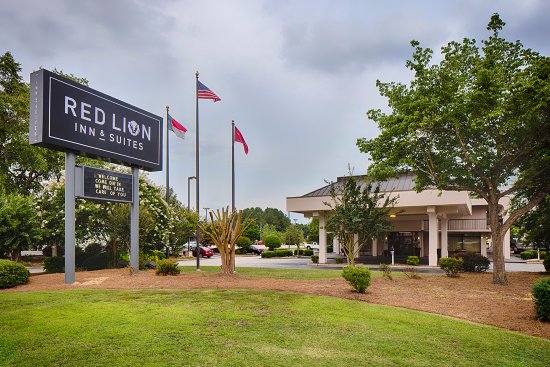
Image result for red lion inn and suites fayetteville

Space in the double rooms can be a little tight: these rooms are double queens but were originally designed to accommodate only double-doubles: when I stay in Chapel Hill overnight, I stay at the Quality Inn there and have more than once stubbed a toe walking around in the middle of the night.

This Fayetteville property isn’t laid out in the U-shape featured in Chapel Hill (or the L-shape featured in Greenville, N. C.), but usually, extra care was taken when these properties were built to have them look sharp, be appropriately landscaped, and not show up as a cheap exterior corridor ‘motel’.

Property website and TripAdvisor reviews

TripAdvisor bubble score: 3.5.


Red Lion Inn and Suites, Fayetteville – Red Lion child site

Financial data available

Limited. Paramount may update their due diligence material on Ten-X, but it appears as though they uploaded the wrong P&L. The one that’s there is for a Holiday Inn in Chattanooga, Tennessee.

The screwup turned out to be an opportunity of sorts. It forced us to rely upon figures from the STR report, and you can get a STR report from any number of places; so we convey no information in this assessment that is subject to a confidentiality agreement, and can share it around a bit more freely.

Read more

Thursday, February 16, 2017

Do most hotels use a specific POS system at the front desk or a larger computer system?

Eighty to eighty-five percent of the hotel POS systems out there are either 

  • so exorbitantly priced that the only reason anyone will buy it and put up with the astronomical monthly support costs is because it's a franchise organization's required purchase (Micros-Opera), or
  • such an absolute piece of crap that the only reason anyone will put up with it, period, is because it's some franchise organization's required purchase (ChoiceAdvantage, HSS in its day)
The only reason the percentage isn't higher is because

  • I have no experience with Marriott's FOSSE and don't expect to (Beechmont isn't a Marriott developer and does not aspire to become one, and FOSSE is Marriott's proprietary system: only Marriott-branded hotels have it.) For all I know, it may be a good system (Marriott owns, or at least itself manages, a lot of their hotels so, like me, they'd have limited patience with such a disease such as Choice Hotels' ChoiceAdvantage, and Marriott would have the size and the clout to insist on the best, and be sure they're getting it); and
  • Most Best Western member hotels - whose owners actually have a choice as to which one to go with - use a good one (Visual Matrix) that I actually like.
Someone got me started on hotel property management systems a few months back (What are the best property management systems for small hotels? ), so I evaluated several systems and called out what I like to see in them.

Image result for open hotel

Get the franchise organizations out of it, and hotel POS systems will get better overnight: the free market and competition would do its power and magic. (I'm going to repost this under 'law' and 'anti-trust law' categories, hoping some ambitious young lawyer who's into anti-trust and mass tort law will get ideas . . . :-) ) Until that day comes, however, hotel POS systems remain in the Ma Bell era. 


What does it take to start a hotel?

Money. Of course.
Unfortunately, way too many hotels are 'started' by people who are completely unmindful of the fact that they could need anything more than that. Even more unfortunately, the ending is frequently a disappointing, if not unhappy, one in such cases.
Image result for hotel construction
You posted this question - whoever you are - anonymously, so I'm going to make certain (hopefully accurate) assumptions about you, in an attempt (hopefully appropriate) to make it a little easier for me to answer your question intelligently.
  • You are looking to 'start' your hotel in the USA.
  • You have capital, or access to adequate (although not unlimited) capital, and financing won't be a problem.
  • You have limited, if any, hotel experience.
  • You're sensible when it comes to business, you're not expecting to get rich quickly, you're in it for the long haul, and your expectations about life are generally realistic.
  • You're a respectable, decent person who desires to be part of a respectable venture in which you can take pride; not someone who's in it for the fast buck, who just wants to launch it next year, hoping to sell it off the following year for a quickie profit, and/or who'd just be trying to milk the last five dollars out of a $3.98 investment for however long it took to find some sucker to buy it.
  • Since you're asking, how does one 'start' . . . you're probably contemplating new construction, not acquiring an existing hotel. (I have a suggestion. Please consider it carefully. If it's your first time, and you have no construction or real estate development experience, consider the acquisition route, at least starting out. New construction requires somewhat more of an investment, it'll take awhile before you get a payout [where, with an existing property, you're getting at least some cash flow the first night after you take possession], and there is more risk involved [e.g., unforeseen cost overruns]. You can always do new hotels later as you gain experience and confidence - as well as revenue streams from your existing properties.)
  • Accordingly, I'm going to assume that you're someone I should advise conservatively.
If my answer doesn't come even close to what you need, it'll be because a dialogue would be more appropriate and we need to have a talk. Please feel welcome to contact me.

Wednesday, February 1, 2017

Why are hotels often slow to innovate?

Because we don't have to if we don't want, so why the heck should we? 

Investment is risky. Leave things be, and we can still have enough people come in the door at a rate we kvetch and whine isn't high enough, to keep the property running in the black and get a low return that we kvetch and wine isn't high enough. And people have little to no patience with results that aren't immediately apparent. 

That's the way most people do it, anyway. Asking me why they don't innovate is like asking me, why would someone not eat, or why would someone not breathe? I can only speculate. But there are a lot of natural human flaws that get in the way, so some of this stuff even comes up for me more than I should let it.


So here goes with some speculation, based on my observations and experience over the years:


Tuesday, January 31, 2017

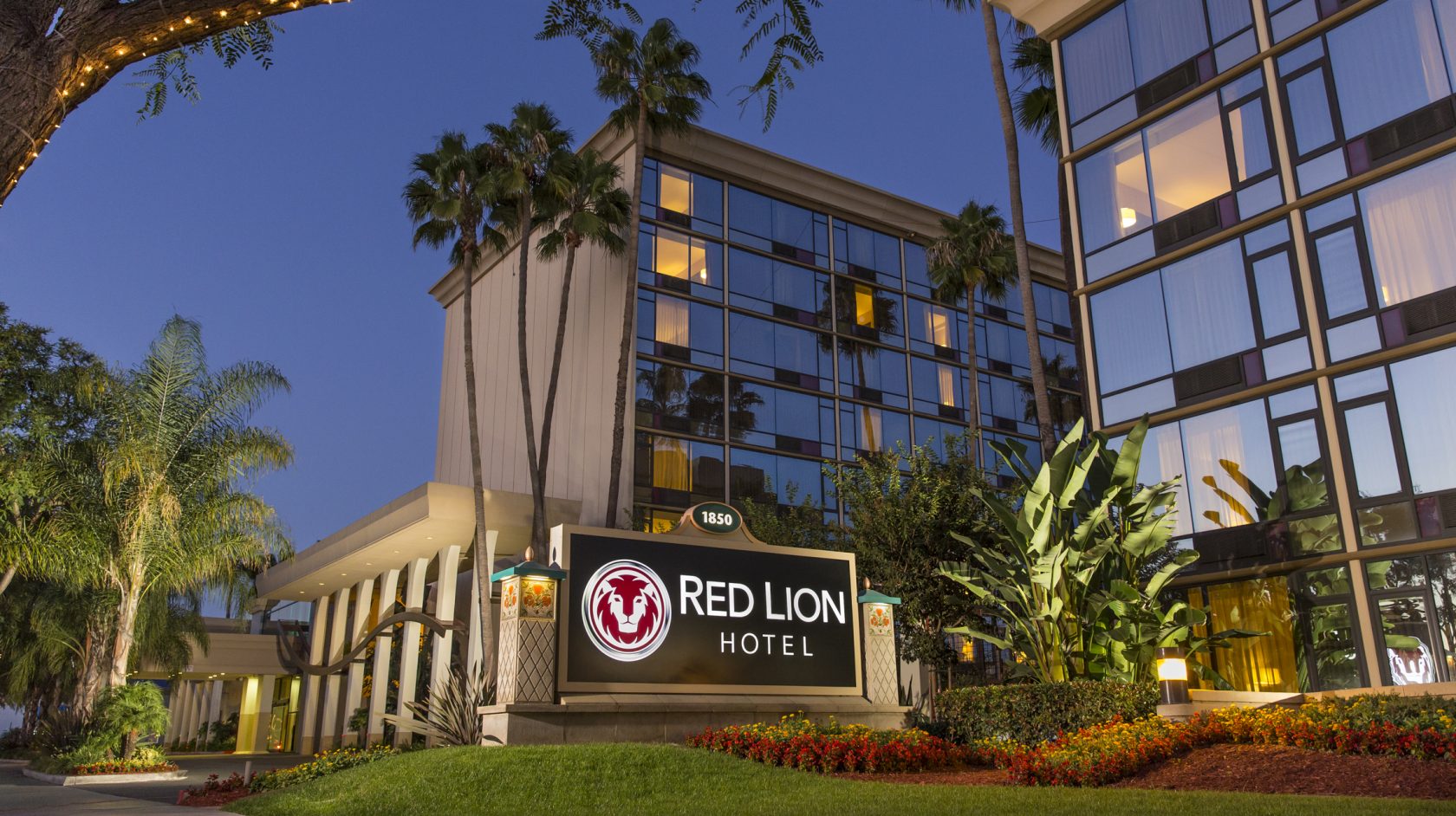
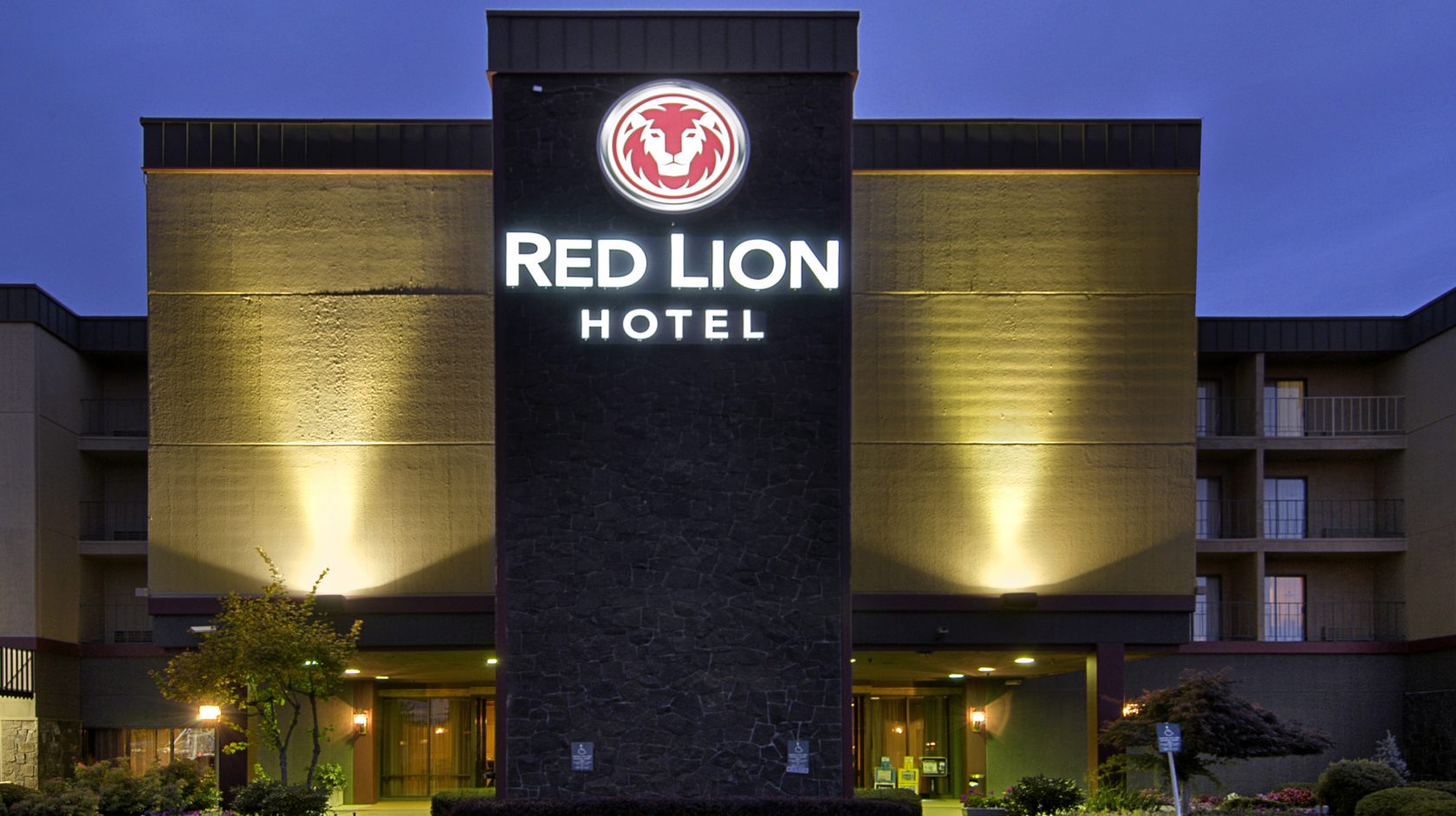
What a Red Lion hotel looks like

Because we frequently recommend Red Lion as a franchise option in the eastern United States, questions frequently come up when we lay it out what kind of upgrades and/or remodeling that they look for in a franchised property.

So, we've done some image searching and collected a few samples to share here.

Image result for red lion hotel
Anaheim, California


Image result for red lion hotel
Salem, Oregon

If you wonder how we can be so fond of Red Lion if they're not paying us a commission (particularly since we're no longer big believers in hotel franchising, anyway, and bother with it at all because our clients show up with lender requirements), it's because Red Lion can accommodate properties like you see here in its system -- they look a little dated, but they still look really nice and are kept up immaculately.

Saturday, January 28, 2017

As a new independent angel investor, how will I find new companies to invest in?

I can set you up with some hotels. 

For example, get onto Loopnet, and look at some Microtels. A Microtel in good condition is a good quality, if modest, mid-market hotel product. But they have historically been marketed and promoted as 'economy' properties - even in areas where they could easily command a higher rate, where the only nearby hotels and motels that charge approximately the same for a room are older and of much inferior quality. Wyndham Hotel Group is now getting away from that, but the franchisees aren't catching up.

So, Microtels tend to be undervalued.

Thursday, January 26, 2017

What is a good way to start a hotel chain?

It's tricky. I'm still working on it.
Any answer I give to this one is a work in progress: for now it is going to appear discreditable on grounds that I've been trying to do just that for the last five years or so and haven't quite scored any hits (insofar as finding a taker - or more specifically, a taker that I'd really want to sell such a venture to - on grounds that you have to start with just one or two 'independent, non-franchised' hotels; but 'independent' hotels are perceived as more risky than franchised hotels). I wish I could give you a better answer on how to do it, but if you're willing to accept an answer that better illustrates how do we intend to go about it, here goes.
Image result for hotel chain
First of all, ask yourself, why would anyone pick your brand, why would anyone prefer a hotel from your 'chain', and why would they remain so committed to it that they'll call you every time? And if you don't have not just one but several answers, maybe you shouldn't do it. There are many hotel chains and brands, but very few successful ones out there. If you don't have good answers to that question, your 'chain' will not grow very large or, without doing a lot of franchising, last very long. (But as I'll share with you as we continue, successful hotel franchising isn't a hotel management success or hotel brand success nowadays, it's a franchising success.)

Wednesday, January 25, 2017

What is the average percentage of business a hotel owner can expect from brand-specific sources? In other words, what percentage of rooms revenue should an individual branded hotel expect the brand itself to contribute?

In most cases, just enough to get you to sign on the dotted line on the last page of the long, long franchise agreement; keep your hotel in their 'chain' for as long as possible, and keep you paying your fees and royalties every month.
Image result for hotel franchise
If you're doing any better than that, they'll want to flag another, newer hotel nearby under the same brand and collect the fees and royalties from them, if not the both of you. So I don't really count on 'rez contribution' to be much more than the 8.5 percent of my revenue - my total revenue, not just the business that brand-specific sources send you - that I'd generally pay in franchise fees and royalties, if even that. And I do track it. (As much as I like some Starwood products, I wouldn't pursue a Sheraton, Four Points or aloft because I don't like their 12% royalties: it can't be worth it. And I've negotiated those for other brands down as low as 5.5%.)
If you get more than that out of the relationship, you're blessed. For as long as it lasts.

What is the difference between a hotel franchise and a management agreement?

Lots of people own hotels. Even more can, and should. (A good half of the people who do now, shouldn't. But if you're smart, that's where the opportunity in it lies for a person like you.)
Not everyone who owns a hotel manages it. That's where hotel management agreements come in.
Even fewer own a nationally recognized hotel brand. That's where franchises come in.
That's the difference.
Image result for vintage howard johnson
Anyone can buy, build, or own a hotel. Doing so can be very rewarding: many doctors, lawyers, dentists, and people who've made a pile in tech ventures should consider doing it. (Like 'Rich Dad' Robert Kiyosaki says, you make money in business, you keep it in real estate.) It can be a profitable real estate investment - but it's not a passive investment. It's a business. (If you bought your hotel from a commercial broker at a price based upon 'cap rate' -- which is not an appropriate metric for hotel valuation -- then chances are, you're in for a painful lesson in just that. I'll try to be gentle with you when you call me to try and fix it, but there will be only so much I can do because you didn't call me first. That's the lesson: you should have called me first.) A hotel must be managed with some level of skill and intentionality.

Hotels: How do I determine which hotel franchise to choose?

I'd have to know the precise location you have in mind before I could go with anything more than a broad-strokes recommendation; but if I were your partner on this venture, or if I were advising you as your prospective management company, I'd say -- between the options you've been given -- give IHG another call. A Holiday Inn Express or Candlewood would be your best bet, if you have to mess with a franchise at all. Their salespeople do play games, but still . . .

Image result for vintage holiday inn

(I assume you're dealing with a lender requirement that you have a franchise: otherwise, I'd suggest a more boutique property, if you have any hotel management experience at all. And don't do anything until you give Best Western a call. It could be that there's another one close to your planned location - did you not call Hampton Inn for that reason? -- and the same would go for any other franchise. But Holiday Inn would always be among my own preferences, if it could be had, at least for another twenty or so years anyway until hotel franchising dies completely. If your location is that good, and you don't put one there, eventually someone else will. I never advise first time owners to go independent, but eventually that's going to change: a franchise offers little to no assurance that it'll help you more than it'll cost you, and that's not going to get any better.)

If you must go with one of the others, I'd probably go with LaQuinta. As a fifth choice (fourth among those you provided), go with Choice, but make it a Sleep Inn, not a MainStay, and not a dual-branded Sleep Inn/MainStay. MainStay is a loser, and hooking it up with a winner - Sleep Inn, as of now, the best brand Choice has left - is as likely to drag down the winner as it is to help the loser. (Is Comfort Suites not an option?)

What does "soft brand" mean in the hotel industry?

A soft brand is a 'chain' or franchise organization affiliation that has a hotel relying primarily on its individual identity rather than that of the 'chain' or organization. The hotel gets to tap into the 'chain's' reservation system, but the formal connection is a little more subtle and discreet.
Perhaps the most famous 'soft brand' - through much of its history, anyway, even if many of their member hotels are not doing a very good job of taking advantage of it nowadays - is Best Western. At one time, they encouraged their member hotels to develop their unique brand identity, with Best Western as part of that identity, rather than operate a "Best Western Inn and Suites", or "Best Western of Podunk" and people I've talked to at Best Western now tell me they're about to try and swing back toward that.

What specific criteria a hotel has to meet to become a Leading Hotels of the World?

Apply, and pass a punchlist to show that you meet their standards, as your hotel would with any franchise organization. 

That's all The Leading Hotels of the World is, a 'consortium', a membership organization, like Best Western.

As to anything more specific, you'd have to ask them. I can't speak for them and since, I suspect, many of the 'standards' at that luxury tier are subjective and will even vary by property, I wouldn't dare try.

Image result for peacock alley

My only qualification to answer this question at all is that I've actually stayed in one: a few years back, the Hotel Bethlehem in Bethlehem, Pennsylvania, was an LHW. I still have a copy of the printed directory in which they appeared.

The Hotel Bethlehem is really nice. I wasn't served tea, so I can't speak to the 'requirements' for how they do it (nor anything else about the service - I'm sure bell service was available, but I only had one bag that I didn't mind schlepping up to the room myself). Indeed, I used to live in Bethlehem and I love that hotel, both for all the usual reasons, and because I used to work for the company that almost bought it (with yours truly putting a flea in their ear, coming up with the idea and egging them on and encouraging them) when its owners went into bankruptcy in 1998 and the opportunity came up for us to buy it, renovate it, and for me to be the project manager (an opportunity to bring a unique set of skills into play, since my degree is in architectural technology, not a hospitality field) and carry on afterward as the g.m. of a high-profile, well-regarded property (not bad for a guy whose first job in a hotel was as a night auditor in a run-down hotel owned by a criminal organization).

Which hotel management system is the most common in the U.S?

Micros-Opera (OPERA Property Management System ). InterContinental Hotels (which includes Holiday Inns) uses it. Carlson uses it. Wyndham Worldwide has it (and one other, cloud-based system) for you to pick from.
Image result for micros opera
Is it 'the standard'? No, and it never will be. It's too exorbitantly priced, both in terms of initial cost and monthly support costs. I've never known an independent hotel to use it -- it's marketable at all because, in every case I've seen it used, it's some franchise organization's required purchase.
I won't touch it with a ten-foot pole unless I'm running a hotel under a franchise that has it forced on me. I can think of two or three that are just as capable, at much lower cost. The one we're currently looking at for our next hotel (http://openhotel.com/ ), while having some things missing that I'd like them to add, or modify their system to accommodate, actually has unique features that were on my wish list from a few years back (Michael Forrest Jones' answer to Is there a demand for a well-designed hotel website service? ).

Originally appeared on Quora

Choice Hotels announced their intention to take the fight to OTAs by focusing on direct bookings – so why are hotels leaving the system?

Choice charges each of its franchised hotels about 8.5% of their total revenue (regardless of source, even if they don’t refer the business to the hotels) in fees and royalties. In other words, if you operate a Choice-franchised hotel, 8.5% of the money you take in goes straight to them. For most hotels in their system, required purchases and other charges bring the total closer to 12%.
At a Quality Inn that we ran, 12% of our rented rooms are Choice reservations referrals — and half of those originated from online travel agencies.
Image result for quality inn
Any hotel can, with a property management system that costs $1000, give or take, can access a reservation feed from OTAs and GDS (Global Distribution System) sources.
Bottom line: we were paying Choice just under 12% of our revenue, and getting in return only 6% of our business.