
Showing posts with label Room inventories. Show all posts
Showing posts with label Room inventories. Show all posts
Monday, July 9, 2018

Saturday, October 28, 2017
Balancing profitability with good taste and media impact, what would you do with Mandalay Bay room 135 floor 32 if managing the hotel were your job?
That room probably no longer exists, as of right now.
Once investigators no longer need to preserve it as a crime scene, and they turn it back over to the hotel management, the knocked-out curtain wall windows would be repaired, and that room -- actually a suite with a conventional room connecting -- would be permanently removed from the room inventory of the hotel, and that space would be completely repurposed.

File storage space is a possibility — and for the near future, if that space is used at all, the most likely one. Provided that it's strictly back office space where no visitors doing business with the hotel would be asked to enter, sales department or comptroller space is also a possibility. Security department use is a possibility.
Whatever its eventual use, it's going to be strictly back office or corporate space for MGM Resorts International (which owns Mandalay Bay and several other casino hotels, and can probably find some corporate use for the space not directly related to the operation of the Mandalay Bay itself), and the doorways leading into it from the corridor will be painted over to make the entrance as nondescript and unnoticeable as possible, much the same way as the door from the corridor to a utility closet or housekeeping area would be.
And the space would probably stand empty for a year or two before even staff would be comfortable being assigned workspace in it. Would you be comfortable having yourdesk moved to that spot?
That space certainly has no future as a guest room. I can't imagine anyone ever wanting to be registered into it as a guest (actually, yes I can, but only the sick kind of person you wouldn't want in the hotel, period), and I don't think a permanent monument would be viable.
It wouldn't surprise me at all to see that entire 32nd floor corridor sealed off for a couple of years, until the disturbance has passed somewhat, and memories start to fade. And when it reopened, I would expect to see all of the rooms on that floor having been totally gutted and renovated, and looking very different from the way they do now.
Once investigators no longer need to preserve it as a crime scene, and they turn it back over to the hotel management, the knocked-out curtain wall windows would be repaired, and that room -- actually a suite with a conventional room connecting -- would be permanently removed from the room inventory of the hotel, and that space would be completely repurposed.
File storage space is a possibility — and for the near future, if that space is used at all, the most likely one. Provided that it's strictly back office space where no visitors doing business with the hotel would be asked to enter, sales department or comptroller space is also a possibility. Security department use is a possibility.
Whatever its eventual use, it's going to be strictly back office or corporate space for MGM Resorts International (which owns Mandalay Bay and several other casino hotels, and can probably find some corporate use for the space not directly related to the operation of the Mandalay Bay itself), and the doorways leading into it from the corridor will be painted over to make the entrance as nondescript and unnoticeable as possible, much the same way as the door from the corridor to a utility closet or housekeeping area would be.
And the space would probably stand empty for a year or two before even staff would be comfortable being assigned workspace in it. Would you be comfortable having yourdesk moved to that spot?
That space certainly has no future as a guest room. I can't imagine anyone ever wanting to be registered into it as a guest (actually, yes I can, but only the sick kind of person you wouldn't want in the hotel, period), and I don't think a permanent monument would be viable.
It wouldn't surprise me at all to see that entire 32nd floor corridor sealed off for a couple of years, until the disturbance has passed somewhat, and memories start to fade. And when it reopened, I would expect to see all of the rooms on that floor having been totally gutted and renovated, and looking very different from the way they do now.
What is the possibility that the hotel security guard, hotel management, police officers, and SWAT team members were all telling the truth, yet there is such a dispute in timeline?
Not surprising at all. Ask any lawyer in a situation where a car accident occurs on a crowded street, and there aren't but two witnesses who actually saw it and can be contacted and questioned. Odds are, one's going to swear the light was red and the other's going to swear the light was green, each will be as honest as the day is long and speaking in absolutely good faith, each will be describing it exactly as he or she remembers it, and that's about size of it. It's just the way of the world. Only one thing can be the truth, yet each witness is being absolutely truthful -- about his or her recollection of it, not necessarily what actually happened.

In the Las Vegas shooting, you had the shooter (who's not saying too much or answering questions right now), a couple of security guards, one or two maintenance guys, some Las Vegas cops, each member of an an entire SWAT team, hotel management, and the front desk staff involved. Each of them will have a unique individual perspective, they will each remember things differently. Each will have been, at the time, observing from a different vantage point in the hotel: some on the 32nd floor, some in the lobby. The only way we could know as close to the whole truth as is relevant is if somebody had been standing right next to the shooter at the time he started shooting, and lived to tell the tale.
But it didn't work out that way, and this investigation is going to be relying very heavily on security video, and reconciling the various individual perspectives and versions of the story.
In the Las Vegas shooting, you had the shooter (who's not saying too much or answering questions right now), a couple of security guards, one or two maintenance guys, some Las Vegas cops, each member of an an entire SWAT team, hotel management, and the front desk staff involved. Each of them will have a unique individual perspective, they will each remember things differently. Each will have been, at the time, observing from a different vantage point in the hotel: some on the 32nd floor, some in the lobby. The only way we could know as close to the whole truth as is relevant is if somebody had been standing right next to the shooter at the time he started shooting, and lived to tell the tale.
But it didn't work out that way, and this investigation is going to be relying very heavily on security video, and reconciling the various individual perspectives and versions of the story.
Friday, May 5, 2017
Hotels for sale: Sleep Inn, Little River, S. C.
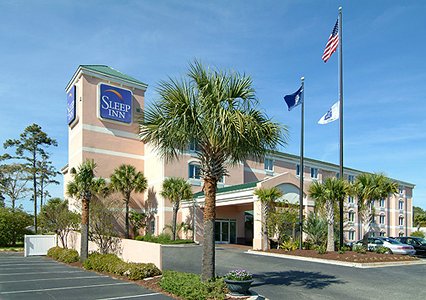
Property offering
SLEEP INN -- HARBOUR VIEW909 US HIGHWAY 17
LITTLE RIVER, SC 29566
Listing broker: Helen Zaver and Vikesh Zaver, Marcus and Millichap
TripAdvisor reviews: Bubble score 4.0

Property website:
- Sleep Inn at Harbour View -- Local website
- Sleep Inn at Harbour View -- Choice Hotels child site
The facility:
This property has a rather odd design for a Sleep Inn: you have to study it a bit to notice that it's a Sleep Inn prototype.
Thursday, February 16, 2017
Why can't many hotel suites, including presidential suites, be booked online?
How many nights do you plan to stay? It can make a difference - and usually does..
A 'suite', with some exceptions (mostly semantic)*, is by definition not one but two rooms or more. We are rarely able to charge double the price of a standard room, and get any takers; despite the fact that the investment by the hotel and its owners in having it there is higher. (It costs more to furnish that living room than it does to furnish a bedroom, and the kitchen fixtures are where it starts to get really pricy.)
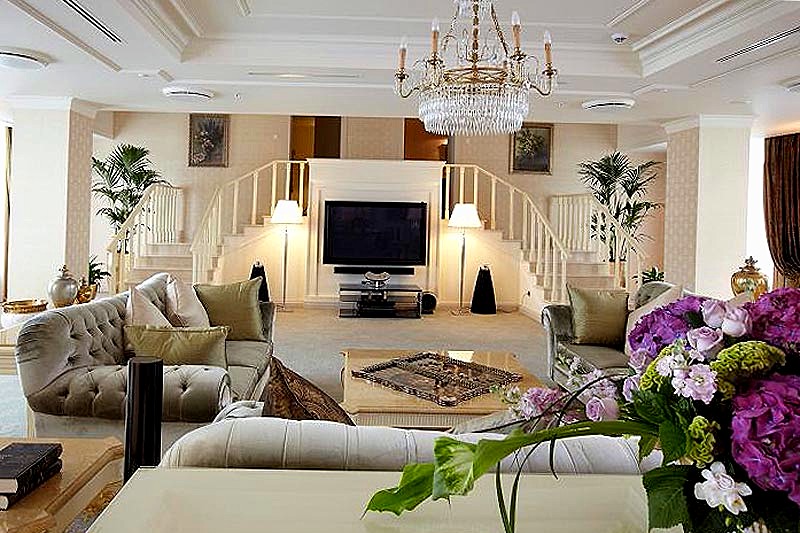
Presidential Suite at Radisson Royal Hotel in Moscow, Russia
We have to rent them at someone for some price, true. So, inside our pricing structure, you're already getting a 'discount' (what we call the 'drop'), and your travel agent didn't 'get' it for you. But we're getting a lower return on them for regular rooms, and we know it's going to take the housekeepers two to three times longer to make them for the next guest (depending upon the number of rooms in the suite). So we're going to have to make that discount worth doing.
A 'suite', with some exceptions (mostly semantic)*, is by definition not one but two rooms or more. We are rarely able to charge double the price of a standard room, and get any takers; despite the fact that the investment by the hotel and its owners in having it there is higher. (It costs more to furnish that living room than it does to furnish a bedroom, and the kitchen fixtures are where it starts to get really pricy.)
Presidential Suite at Radisson Royal Hotel in Moscow, Russia
We have to rent them at someone for some price, true. So, inside our pricing structure, you're already getting a 'discount' (what we call the 'drop'), and your travel agent didn't 'get' it for you. But we're getting a lower return on them for regular rooms, and we know it's going to take the housekeepers two to three times longer to make them for the next guest (depending upon the number of rooms in the suite). So we're going to have to make that discount worth doing.
Do hotels give out the most undesirable rooms at check-in by default? If so, why?
It happens but I wouldn't say it's something that happens altogether 'by default'. See Michael Forrest Jones's answer to How do hotels assign rooms.
First of all, undesirable rooms are tricky to sell, at least to other than undesirable guests. We want the room to be fresh, clean, comfortable, everything in it in good condition and working; because we want you to like us, and like our hotel, and we want you come back (and if for no better reason than we don't like to hear you complain). I take it that you mean undesirable as 'less to be desired than other rooms of generally equal size, furnishings and amenities' (say, because of not much of a view, or at the end of a long hallway, or it's because it's too close to an elevator or a vending area and you have to put up with the noise from that), a few of which will be present in any hotel.

Also, keep in mind that in a well-maintained property, there won't be too much variation in the quality of the rooms - if any at all is noticeable. Some will have more space or amenities and will sell at a higher price. Some will be due for remodeling, if the hotel is large enough that remodeling is done in stages (e.g., they do one floor every couple of years, so that over a ten-year period, the rooms on all five floors get done and it's time to repeat the cycle) and where such a state of affairs is present, what I might do is price those rooms a little lower. But even then, the variation in quality isn't going to be that much: you shouldn't even notice it. As a practical matter, it can't be. Too many guests that come in are not shy at all about wanting the best room in the house at a discount off what the guy in the cheapest room is paying.
First of all, undesirable rooms are tricky to sell, at least to other than undesirable guests. We want the room to be fresh, clean, comfortable, everything in it in good condition and working; because we want you to like us, and like our hotel, and we want you come back (and if for no better reason than we don't like to hear you complain). I take it that you mean undesirable as 'less to be desired than other rooms of generally equal size, furnishings and amenities' (say, because of not much of a view, or at the end of a long hallway, or it's because it's too close to an elevator or a vending area and you have to put up with the noise from that), a few of which will be present in any hotel.
Also, keep in mind that in a well-maintained property, there won't be too much variation in the quality of the rooms - if any at all is noticeable. Some will have more space or amenities and will sell at a higher price. Some will be due for remodeling, if the hotel is large enough that remodeling is done in stages (e.g., they do one floor every couple of years, so that over a ten-year period, the rooms on all five floors get done and it's time to repeat the cycle) and where such a state of affairs is present, what I might do is price those rooms a little lower. But even then, the variation in quality isn't going to be that much: you shouldn't even notice it. As a practical matter, it can't be. Too many guests that come in are not shy at all about wanting the best room in the house at a discount off what the guy in the cheapest room is paying.
Saturday, January 28, 2017
What's the best way to show my appreciation for a hotel desk clerk that routinely upgrades me to a suite, free of charge? (I stay at a specific hotel regularly and the desk has the option to upgrade my room. They do it almost every time at no charge. I don't think it's a corporate policy to upgrade regulars; the clerks pick and choose the upgrades based on personal discretion. What's a good way to "tip" them?)
Whatever you feel might be a fair amount of severance pay for the clerk, if it happens in my barn and I find out about it later. Or at least enough to compensate him or her for the written warning and the several days off he or she is going to get -- if the clerk is new and inexperienced, and I think he or she might be salvageable with a better understanding of how the business works and the occasional issues of ethics involved, and he or she still has a job there at all.

Upgraded and upscale rooms are priced a little higher for a reason.
We give out upgrades (Shoot, we do that more often than we rent the rooms at the full, upgraded rate.) We give out discounts. (Sometimes, I wonder why we even bother having a regular rate: see Michael Forrest Jones' answer to What is and why do hotels have a rack rate? ). But when we do, that's always done for a reason: it has to benefit the hotel in some way. An upgrade or a discount is, when given, the hotel's gift to give, not the clerk's. The clerk is only - or at least only supposed to be - acting on behalf of and in the interests of the hotel.
Wednesday, January 25, 2017
Why don't hotel rooms have three beds?
Lack of demand, plain and simple.
In nearly thirty years in this business, I've seen one 'triple-double' room - and it almost never got rented as long as there was a more conventional room to be had at that property. It was in a space where the building, an older, one-story motel, was laid out in an angle to keep the building roughly parallel with the neighboring street, and that space was too big for a standard double-double room, and two small to be divided into two rooms.

Hmmm . . . there's one hotel, in the Czech Republic, that has 11 rooms of that type. But that's how far you have to go to find one.
Originally appeared on Quora
In nearly thirty years in this business, I've seen one 'triple-double' room - and it almost never got rented as long as there was a more conventional room to be had at that property. It was in a space where the building, an older, one-story motel, was laid out in an angle to keep the building roughly parallel with the neighboring street, and that space was too big for a standard double-double room, and two small to be divided into two rooms.
Hmmm . . . there's one hotel, in the Czech Republic, that has 11 rooms of that type. But that's how far you have to go to find one.
Originally appeared on Quora
How do hotels assign rooms to guests?
However the desk clerk wants.
There is some planning that might go into it for a well-run hotel, however. (Every hotel will do what works best for that particular hotel.)
There is some planning that might go into it for a well-run hotel, however. (Every hotel will do what works best for that particular hotel.)
- You want to match the room type with the needs of the guest and what he or she is willing to pay for. Families generally get double-doubles (that's your standard, mark-one-mod-zero 'hotel room' with two double beds, and the trend in better hotels is going to two queen beds in such rooms). Couples, or people traveling alone, like a room with one king bed. Cheaper hotels have a room with one double bed - a single - for people who don't want to pay a lot of money. (What the guest asks for is the ultimate guide, to the extent practicable at all, but if you're going to make the call based on no more info than "how many people?...")

- Reservations have priority: we've already made a commitment to those people and we have to honor it. Advance reservations also make better advance planning possible.
Why do hotels have a check-in/check-out time? Could 24 hours (i.e anytime) check-in checkout be a differentiator?
If we have a room ready for you, we'll generally let you check in prior to three. Usually if we don't, it's not because we're being mean, it's because logistics can be a problem (Michael Forrest Jones' answer to Arriving early to a hotel, I often hear "your room is not ready yet." Do hotels reserve you a particular room or do patrons simply have a spot in the hotel reserved for them?)

Giving you a late check-out if you wish is frequently more tricky, but even that can be negotiated if you approach it in a considerate manner. (Michael Forrest Jones' answer to How lenient are hotels when it comes to checking out late? |Michael Forrest Jones' answer to How long after checkout time can I leave my hotel room without incurring fees or hassle? ) Here again, we're not trying to be difficult, but we have logistics issues around that.
One of my first hotels after making the transition from hourly employee to management was a too-large hotel (Michael Forrest Jones' answer to What do hotels do with unused guest rooms?) in not an altogether great highway location, with not that many demand generators nearby -- but among the demand generators we did have was a couple of truck terminals. So I worked it out with one of those to allow the drivers to rent the room in 24-hour blocks: if the driver checked out after the housekeepers went home, we'd just 'roll' the room and let them clean it the next day.
But we had the extra rooms and a vacancy problem, and no one else was going to rent them anyway, so we could afford to do that -- and we needed the business. It was a little extra recordkeeping for the clerks to stay on top of, but not that many hotels have an incentive to take that on. Most hotels, like it or not, have to stay in sync with the general human biological clock.
Originally appeared on Quora
Giving you a late check-out if you wish is frequently more tricky, but even that can be negotiated if you approach it in a considerate manner. (Michael Forrest Jones' answer to How lenient are hotels when it comes to checking out late? |Michael Forrest Jones' answer to How long after checkout time can I leave my hotel room without incurring fees or hassle? ) Here again, we're not trying to be difficult, but we have logistics issues around that.
One of my first hotels after making the transition from hourly employee to management was a too-large hotel (Michael Forrest Jones' answer to What do hotels do with unused guest rooms?) in not an altogether great highway location, with not that many demand generators nearby -- but among the demand generators we did have was a couple of truck terminals. So I worked it out with one of those to allow the drivers to rent the room in 24-hour blocks: if the driver checked out after the housekeepers went home, we'd just 'roll' the room and let them clean it the next day.
But we had the extra rooms and a vacancy problem, and no one else was going to rent them anyway, so we could afford to do that -- and we needed the business. It was a little extra recordkeeping for the clerks to stay on top of, but not that many hotels have an incentive to take that on. Most hotels, like it or not, have to stay in sync with the general human biological clock.
Originally appeared on Quora
Tuesday, January 24, 2017
How does a hotel make decision on the number of rooms?
In most places (I deal in select service properties, no food or beverage except a complimentary breakfast, little to no meeting space, similar to a Hampton Inn if your first priority is ‘nice’, or a Red Roof Inn if the most important thing to you is ‘adequate but cheap’), 60 to 80 rooms is optimal.
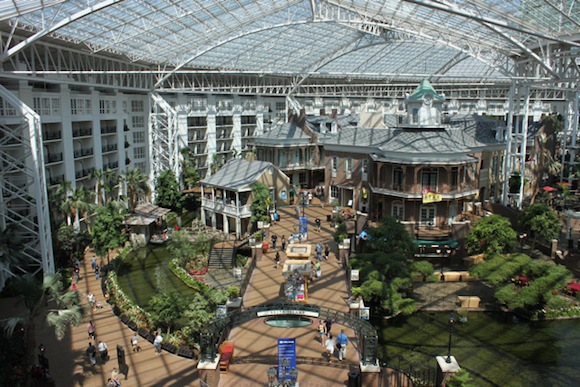
You may go slightly smaller. (We’re actually planning a few 46-room properties in smaller towns where there is no existing Class A property, and we’re okay that the demand is there. For example, one of those places is one of those mid-state North Carolina furniture manufacturing towns with a population of maybe 3000 and a spunky, aggressive and somewhat muscular local business community; where the nearest Class A hotels are thirty miles away — and where our preferred mattress provider has its headquarters and factory located. The need there, as perceived by that business community, is so great that our mattress guy there faithfully assured me, if you put a new hotel here, we will give you any mattresses you want at our cost. I don’t have the bucks for it, so I’m looking for a partner, but I think taking him up on it might just work.)
Subscribe to:
Posts (Atom)