Showing posts with label Hotel policies. Show all posts

Saturday, October 28, 2017

Being a skilled writer, what is the best approach to solicit free stays at the finest bed and breakfasts or resorts in exchange for a detailed and thorough 5-star review of said places?

You're on your own with this one: work it out however you can work it out, with whatever B&B owner.

It may sound like I'm being unhelpful (depending upon what you had in mind, maybe I am — frankly, I’m a little skeptical of your intentions), but I'll help you with this much: hotels get no end of requests such as this (involving either cash payment or comp rooms) from both vendors and from people who think they can provide some 'service' to the hotel having “public relations” value that would have people flocking to us. A hotel manager might probably view even a potentially workable scheme skeptically and with some cynicism.


One of the most annoying things about the “hospitality industry” for people working in it is that everyone has an idea that’ll make a million bucks — so long as it’s someone else’s million bucks. As a matter of policy, we don’t publish our fax numbers, and give them out at all only very selectively; because every month, a tree dies to make enough paper to print out the junk advertising faxes that show up (cheap linens and terry, used furniture, directory listings in hotel directories that no one’s ever heard of, used furniture, secret 5-star review formulae, Nigerian fraud schemes, etc.) at hotels that do. I’ve been able to put up with having the same e-mail address for the last ten years only because I use anti-spam and Gmail filters religiously. And it’s hard for me to be polite to salespeople who call me two or three times a month at random times (usually interrupting something I’m doing) just to “touch base”.

Monday, May 22, 2017

What is and why do hotels have a rack rate?

Sometimes, with all these 'entitlement' discounts, I wonder myself . . .

First of all, rack rate is not - at least not in the US - set by law. If some hotel clerk told you that, he or she either didn't like you, or just didn't want to give you any kind of discount. Every hotel sets its own rates - and its own exceptions to and discounts from those rates.

(Some localities require the hotel to post their rates, like on the inside of the door to your room, usually a scheme to thwart price gouging, or fraud by clerks. Where there is such a requirement, you'll see an astronomically high rate posted, in anticipation of the expected rate for the most high-demand special event in the area . . .)

Rack rate is the asking price for a room, the set price from which nearly all discounts are calculated.

How much? Well, certainly I want to cover my costs, make a profit, etc. - but it is strictly market driven. (Consider Hampton Inns, or Courtyard by Marriott. A room at a Hampton Inn, or a Courtyard, is going to come pretty much one way. But a king room at a Hampton Inn in one city can be priced very differently from a similar king room at a Hampton Inn in another, depending upon the local market. The same goes for Courtyard, and any chain that emphasizes product consistency and uniformity.) I'm going to set it at an amount comparable hotels are asking for comparable rooms. Set it lower, and I'm charging less than the guest might be willing to pay; set it higher, and unless my property has amenities and features for which the guest considers worth paying a little more, I'm going to lose business to the competing hotels.


And now, the discounts . . . You can pretty much figure that everyone who walks in the door has some rationale why he or she should receive a 10% discount from the rack rate.

Thursday, February 16, 2017

Why can't many hotel suites, including presidential suites, be booked online?

How many nights do you plan to stay? It can make a difference - and usually does..

A 'suite', with some exceptions (mostly semantic)*, is by definition not one but two rooms or more. We are rarely able to charge double the price of a standard room, and get any takers; despite the fact that the investment by the hotel and its owners in having it there is higher. (It costs more to furnish that living room than it does to furnish a bedroom, and the kitchen fixtures are where it starts to get really pricy.)

Image result for presidential suite
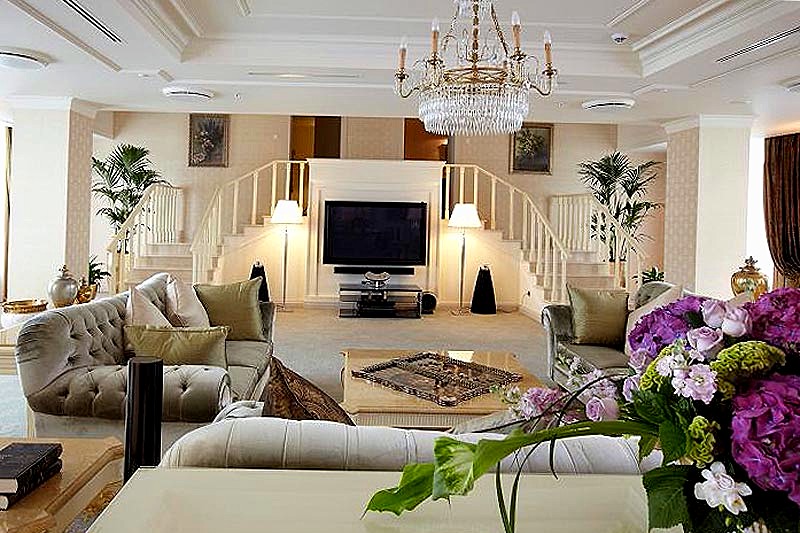
Presidential Suite at Radisson Royal Hotel in Moscow, Russia

We have to rent them at someone for some price, true. So, inside our pricing structure, you're already getting a 'discount' (what we call the 'drop'), and your travel agent didn't 'get' it for you. But we're getting a lower return on them for regular rooms, and we know it's going to take the housekeepers two to three times longer to make them for the next guest (depending upon the number of rooms in the suite).  So we're going to have to make that discount worth doing. 


Wednesday, February 1, 2017

Why is it difficult to rid a room from the smell of cigarette smoke?

Any scent or odor is made up of microscopic particles of the substance that is the source of the scent or odor. Tobacco smoke floats in the air, and gets absorbed into everything it touches: your clothes (and even the clothing of people around you), the drapes, the bedding, the carpet, even the wallpaper. Once the smoke hits a wall, or a ceiling, or whatever and can no longer escape from the space it's in, it's got to settle somewhere.

Image result for non-smoking room

Because it's mixed with moist, exhaled air, tobacco smoke tends to be kind of damp, to be absorbed into things, to stick like glue as it dries, and to accumulate with added exposure. In a hotel where housekeeping is slack enough to let it get to be a problem, I can stand out in the parking lot and point out the smoking rooms: they'll have that brown film on the glass that contrasts against the white backing of the drapes in the rooms - which itself will be coated with the same film - just like the inside of the car windshield in the vehicle of a driver who likes to smoke in the car . . .

Saturday, January 28, 2017

What would happen if I accidentally left behind a $50 bill in my hotel room?

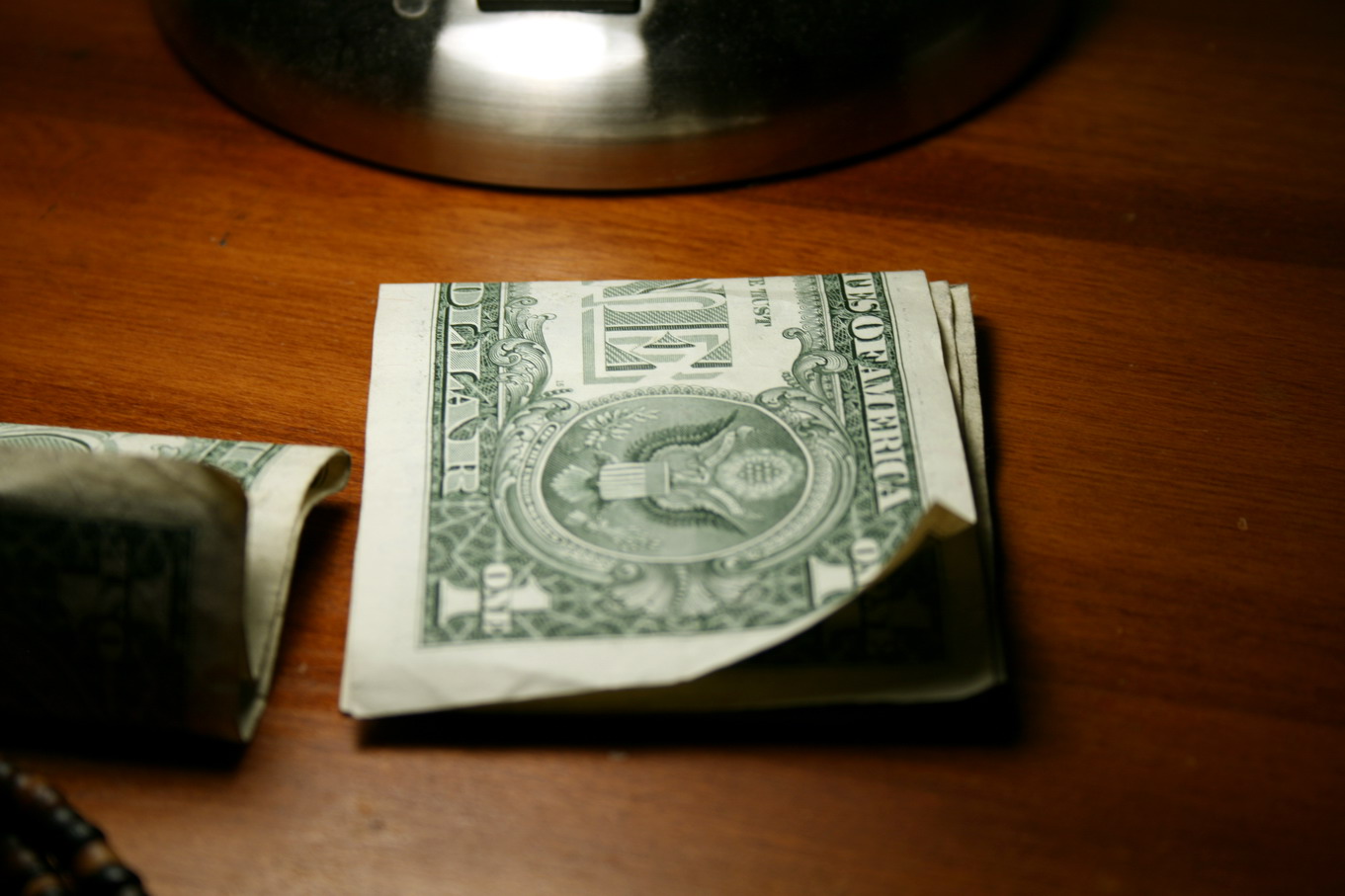
Rules vary by hotel, but if I left a loose fifty bucks in a room when I stay in one, I wouldn't count on ever seeing it again.

The policy in hotels that I run is, if a housekeeper's 'tip' is over twenty bucks, she must tell us, and turn it in. We'll let her keep twenty bucks of it, and hang on to the rest in accordance with the usual lost and found procedure (thirty days). If the guest calls with a credible story (as in, he or she names close to the correct amount of money left behind) about how he left loose cash in the room, we send a check to the guest for the total amount we found, and we take the hit on the twenty bucks ourselves and let the housekeeper keep that part (we don't want to supply an incentive to dishonesty, or a disincentive to honesty). 

Image result for money on the dresser

If it's in a wallet, there's no question: any indicator that it wasn't left for the housekeeper intentionally by the guest means that it all belongs to the guest. We handle it in accordance with our usual lost-and-found procedure. (With wallets and other things of obvious value, we don't wait for a call: we contact the guest.)

Back in the day, tipping the housekeeper was as to-be-expected as tipping a waitress. Large chains and franchise organizations have gotten away from it (you can still order tip envelops from a hotel supply house, but chains and franchise organizations forbid the use of them.)  Hotel owners went right along. Tips present a management challenge (disputes arise over how to divide them if more than one housekeeper services the room over several days, and any room attendant with any 'seniority' at all demands the 'right' to pick and choose what rooms she'll clean, and we'll get to some others . . .) 

After checking out of a good hotel, what services is it reasonable to expect to use for the remainder of that day? (I checked out of the Park Hyatt today at noon, left my bags and when I retuned to collect them I sat in a reception lounge reading for a bit and I charged my phone. I was told that as I was no longer a guest I shouldn't stay long! Where would be a good place to draw the line as a recent guest and what you can and can't do.)

I can't give you a good answer (at least not in terms of present-day applicability) to that question because frankly, most hotels do not have a policy on that, nor have they ever considered one.  

Someone on the hotel staff might okay it, as a personal accommodation in the spirit of hospitality (which most hotels encourage among their staff - and I will concede based on what you tell me that the staff at the Park Hyatt that you describe was being a bit harsh). But - as you yourself noticed -  that leaves you at the mercy (or whim) of the hotel staff; which can vary not only from hotel to hotel, but between individual managers and staff members within the same hotel.  

Image result for hotel business center

A hotel needs to have a policy in place for it, and frankly, most don't. (Unapologetic spam piece: now that I've seen your question, we will.) 

Is it illegal to check into a hotel under a wrong name?

It's not illegal, but we're not going to let you do it. Every guest must show an ID at check-in. (That's not a law, it's our policy, and one we feel that it would be irresponsible to not have, and to not go by. Our house, our rules. You don't have to show the ID, but if you choose not to, we're not going to rent you a room. Your choice.)

Image result for couple checking into motel

Famous people just have someone else check in for them. As long as that someone else is actually staying in the hotel, we let them (Michael Forrest Jones' answer to How do celebrities stay in hotels under assumed names? ).

About the only law I've seen on the subject shows up in Southern states, the Carolinas in particular. Don't sign in as "Mr. and Mrs." at a hotel or motel in North Carolina unless you are in fact married to the person accompanying you: it's a violation of a statute entitled 'Occupying a Hotel Room For An Immoral Purpose'. 

Thursday, January 26, 2017

I am a hotel owner. I sometimes have guests sneaking in more guests who are not registered. Our liability insurance only covers guests, and these extra visitors use our amenities and often leave the place a mess, and are a nightmare when they injure themselves, etc. How do I deal with this?

You don't have my shoulder to cry on about this one.
I've never visited your hotel (I'm assuming here that it's in the USA), but if I did, what I'd expect to find is that you've got bigger problems than guests sneaking in extra people; and that the way you operate, you're bringing it down on your own head.
And if I had your guest list in front of me, I'd also be willing to bet before even looking at it that most of your guests live in or around a single city - the one in which your hotel is located. I suspect based on the information that you provide in your question that your hotel's business is entirely too 'local'-dependent.
Image result for hot pillow motel
And you've let it, or you're letting it, get out of control. Simply put, your hotel's security sucks.
So far, you've gotten off easy with high cost of amenities that non-guests help themselves to, and some property damage. Eventually, you're going to have a serious crime occur there.

Wednesday, January 25, 2017

Why do expensive hotels nickel and dime you?

Because they can. And in the end, nobody really cares.

(You and I don't count. While I was writing this one up, I recalled that a quarter century ago, they came up with a hotel brand that was all but made for people like you and I who go nuts with all the 'extra' charges, having to deal with people who are in the 'fee collection' business; and went overboard with my weakness for storytelling . . . If it's any consolation, I did come up with an idea for a new venture.)

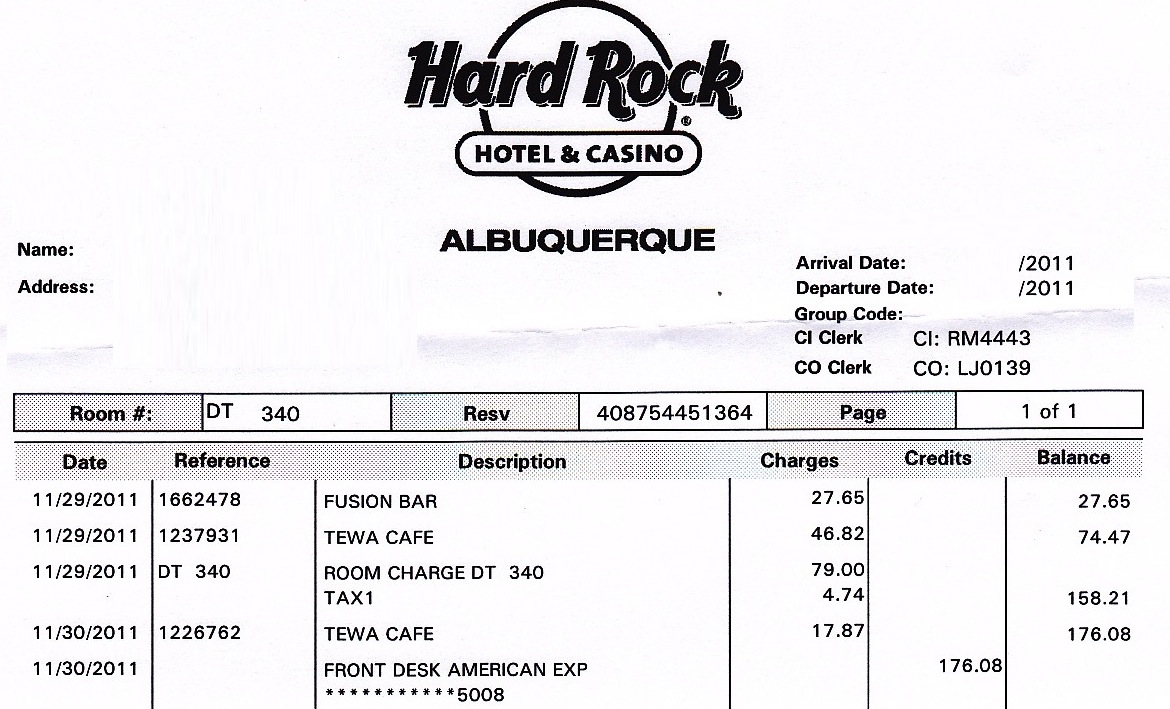
Image result for hotel bill

There are several reasons why.

  • A few years back when I was on a trip to my mother's home, my mom, who developed a liking for plush, late-model American-made luxury cars as she reached a point in life where she could afford them if she bought them slightly used, was shopping for a Cadillac or a Lincoln for herself on Cars.com, but - ever my frugal mom -  going nuts because she couldn't find a model that uses regular gas. All Cadillac and Lincoln models, it appears, use premium. Every time she'd find another car on Cars.com and Edmunds that she liked, it would be the same thing: she'd look up the model and find she'd have to buy premium gas for it. She was starting to drive me and my stepfather a little nuts with it, too. I told her, Mom, a guy goes out and spends fifty to seventy-five grand to buy a brand new Caddy, he's not going to be the type to complain about having to pay an extra thirty cents a gallon on gas at three dollars and something per gallon. If he were, he'd do like I do, get a Honda, VW or Toyota for half as much that works just as well and burns regular. So, they don't bother to design them to burn regular gas. But for the last few months, the extra cost, high-test gas has been my problem. The last two years have not been my mother's best: she has been diagnosed with cancer and isn't going to be with us much longer. She has done some estate planning, cashed some insurance policies; and more recently divided up some money and property among my brother, sister and myself. In the process of getting herself down to one vehicle, she gave me one of her Cadillacs. I like Cadillacs and Town Cars but I don't have a particular preference for them like she did for the last fifteen years: quite frankly, the extra forty cents a gallon for premium gas is one of the reasons why. But I like having my mom's Caddy and am glad she thought of me. It happened just as I needed to replace a vehicle; but rather than buy one, I now have something that belonged to my mom that I should get a few more years out of after she's gone. That means more to me than the brand. So, I make my peace with the high-test gas: it's part of the price of having that car. (Late note, March 30, 2014  ) It works the same way for hotels, if you'd rather stay at a Ritz-Carlton or St. Regis rather than a Hampton Inn or a Courtyard. If you want the product, and don't care if it's a little more pricy, then you're not as likely to notice, or complain about, the extras that come with it but are priced separately. Those are part of the price.

What do hotels do with unused guest rooms?

Get rid of them, if I can't find a way to sell them at a decent price, and if I can find a way to eliminate them that the owners will go along with.

I'm serious.


The same law of supply and demand that means you have to pay $175 to $300 per night for a mediocre room in a mediocre hotel in, say, New York or Boston, where scarcity of hotel rooms occurs naturally, also turns around to bite us in the butt when scarcity is . . . well, scarce

So, I'm going to create some scarcity - even if I do it by letting some rooms go empty.

I might have an older 125-room property, for example, that was built in the '70's. 

How do hotels assign rooms to guests?

However the desk clerk wants.

There is some planning that might go into it for a well-run hotel, however. (Every hotel will do what works best for that particular hotel.) 
  • You want to match the room type with the needs of the guest and what he or she is willing to pay for. Families generally get double-doubles (that's your standard, mark-one-mod-zero 'hotel room' with two double beds, and the trend in better hotels is going to two queen beds in such rooms). Couples, or people traveling alone, like a room with one king bed. Cheaper hotels have a room with one double bed - a single - for people who don't want to pay a lot of money. (What the guest asks for is the ultimate guide, to the extent practicable at all, but if you're going to make the call based on no more info than "how many people?...")
Image result for hotel clerk

  • Reservations have priority: we've already made a commitment to those people and we have to honor it. Advance reservations also make better advance planning possible.

Why do you have to be of a certain age to rent a hotel room?

No contract with you is legally enforceable unless you have capacity to form a binding contract -- which you generally lack prior to age eighteen -- but there is a little more.

I've seen 16-year-olds that are quite capable of renting a room, and behaving themselves in it as a guest who would always be welcome back: just relax in the evening, not have a bunch of people in there throwing a party and trashing it, not making excessive noise, not doing anything illegal (whether drugs, underage drinking, or underage sex), and not doing any damage. I've seen people in their 50's that it's not safe to rent a room to.

Image result for spring break hotel

But if you rent to people under 21, experience and observation over time will show that most of your problems will come from the 21-and-under category. Any age limit is arbitrary, but it's easier to just impose one than to personally get to know every 18-to-21-year-old who shows up and make a more fair and objective assessment regarding the likelihood of those problems.

How can someone check into a hotel under a fake name?

Find another hotel. We're not going to do it, for security reasons.

If I knew you, maybe, but don't count on it. I'd have to be okay with the reason for it, and it would have to justify the need to ask my staff to go along - notwithstanding a strict rule that they're never to do that, and each of them understands why. 

Image result for hotel guest register

People who are famous and have an extraordinary need for privacy measures usually have an assistant rent the room. 

Also, we're not unknown to 'hide' someone who has personal security issues (victims of domestic violence, people who've been threatened in some way), but - again, for security reasons and the fact we have other guests to think about - we don't want to become too well known for such a thing, and don't really encourage that kind of business..

Originally appeared on Quora.